



OT for Autism: What Occupational Therapy Actually Does for Autistic Children
When your child receives an autism diagnosis, the list of recommended interventions can feel overwhelming. Speech therapy, ABA, social skills groups, occupational therapy, each one described in clinical language that makes it hard to know what any of it actually looks like in real life, or which one to prioritize first. If occupational therapy has been recommended for your child and you are wondering what an OT actually does with an autistic child, you are asking exactly the right question. And the answer is more expansive, more practical, and more hopeful than most parents expect.
OT for autism is not a single intervention. It is a whole-child approach that addresses the sensory, motor, emotional, and daily living challenges that make everyday life harder for your autistic child than it needs to be. It meets your child where they are, builds on what they are already capable of, and creates a pathway toward greater independence, regulation, and confidence in their body and their world. It does not try to change who your child is. It builds the skills and supports that help your child thrive as exactly who they are.
In this post you will find clear, practical answers to the questions parents ask most often about OT for autism, including what an OT actually does in sessions, how OT addresses sensory processing, daily living skills, fine motor development, and emotional regulation, and why in-home OT offers something that a clinic simply cannot replicate. Your child deserves support that sees the whole of who they are.
In case you are new here, I am Erika, a pediatric occupational therapist and the founder of Play2Learn Plant2Grow an in-home pediatric OT services. I work with autistic children and their families inside their homes and their daily rhythms because I believe that is where the most meaningful growth happens.
What does an OT do with autism?
Occupational therapy for autism addresses the areas of daily functioning that are most affected by your child's unique neurological profile. The word occupational in occupational therapy refers to the occupations of daily life, meaning everything your child does throughout their day, from getting dressed in the morning to playing with peers, managing a pencil at school, tolerating a noisy cafeteria, and falling asleep at night. An OT identifies which of these daily occupations are difficult for your child and why, and then builds a targeted plan to address the underlying skills that make those occupations possible.
For autistic children, the areas that OT most commonly addresses are sensory processing, fine motor development, gross motor coordination, daily living and self-care skills, emotional regulation, and social participation. These areas are not separate from each other. They are deeply interconnected, and a skilled OT always looks at how they influence each other in your child's specific situation. A child who is overwhelmed by sensory input will have difficulty with emotional regulation. A child with poor fine motor skills will struggle with self-care tasks like buttoning and zipping. A child who cannot regulate their nervous system will have difficulty engaging in the social and academic demands of a school day. OT addresses all of these connections, not just the isolated skill.
What areas of development does OT address for autistic children
Sensory processing is typically the first and most fundamental area that OT addresses for autistic children. The majority of autistic children experience some form of sensory processing difference, whether that is over-responsivity to certain types of input, under-responsivity, sensory seeking, or a combination of all three across different sensory systems. These sensory differences affect virtually every aspect of your child's daily life, from what they can wear and eat to how they manage a classroom environment or a family gathering. Addressing sensory processing is not just one piece of the puzzle. For most autistic children, it is the foundation that everything else is built on.
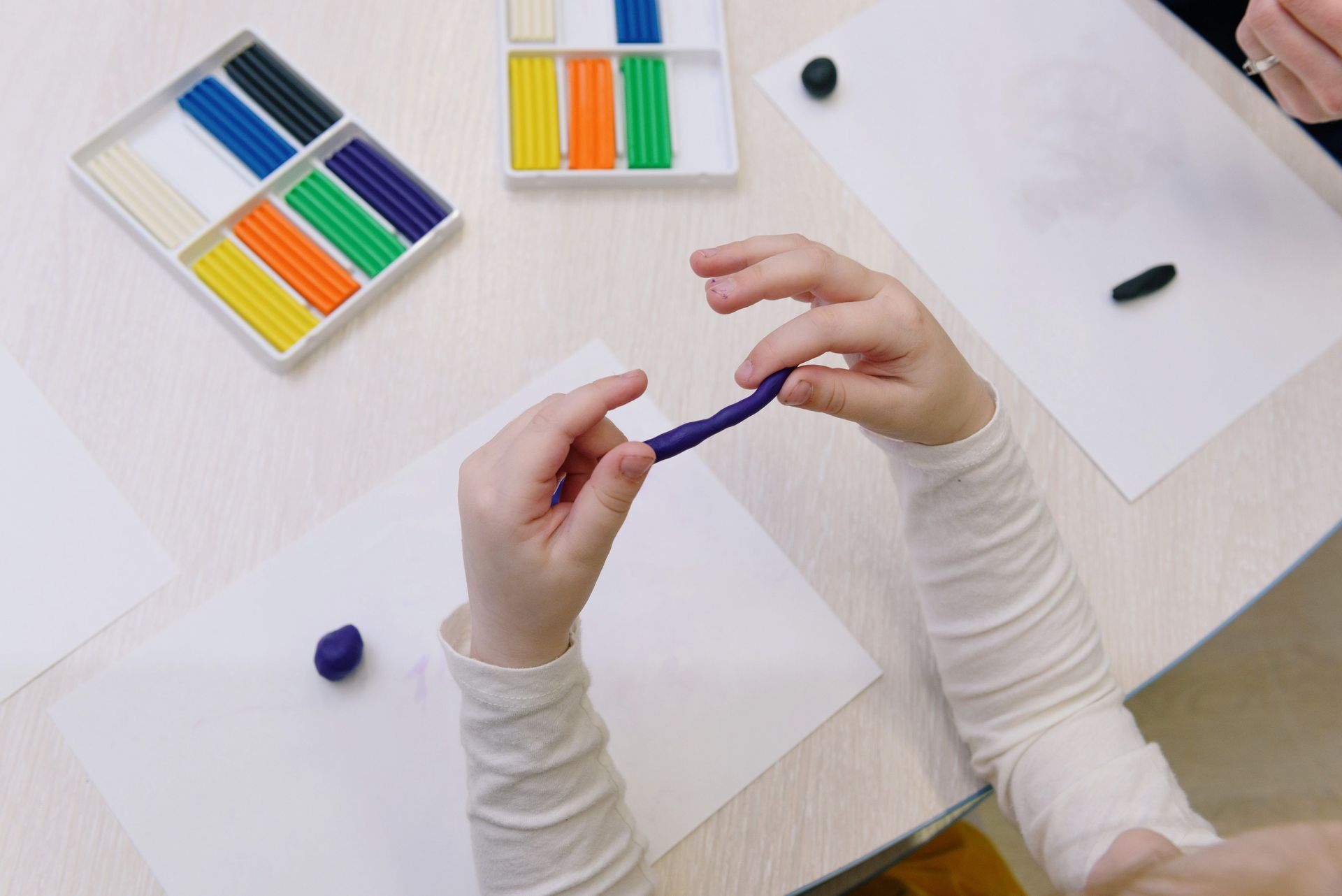
Fine motor development is another core focus area. Many autistic children have differences in fine motor coordination, hand strength, pencil grip, scissor use, and in-hand manipulation that affect their ability to manage self-care tasks, participate in classroom activities, and express themselves through drawing and writing. OT builds these skills through play-based activities that are carefully chosen to target the specific underlying deficits rather than drilling isolated skills in ways that feel punitive or disconnected from real life.
Daily living skills, sometimes called activities of daily living or ADLs, include dressing, feeding, toileting, hygiene, and sleep routines. Many autistic children need explicit, structured support to build these skills, particularly when sensory sensitivities or motor planning differences make ordinary self-care tasks feel overwhelming or physically difficult. OT breaks these skills down into manageable steps and builds them systematically, often using visual supports and predictable routines that make the process feel safe and achievable.
Emotional regulation is one of the most important and most misunderstood areas OT addresses. Many autistic children experience big emotions and meltdowns not because of behavioral choices but because their nervous system is genuinely overwhelmed by sensory input, unexpected change, or the cumulative demands of a long day. OT helps build the internal awareness and external tools that support regulation, including recognizing early signs of dysregulation, using sensory strategies to prevent escalation, and building a personalized toolkit of calming strategies that actually work for your child's specific nervous system.
How OT sessions actually work for autistic children
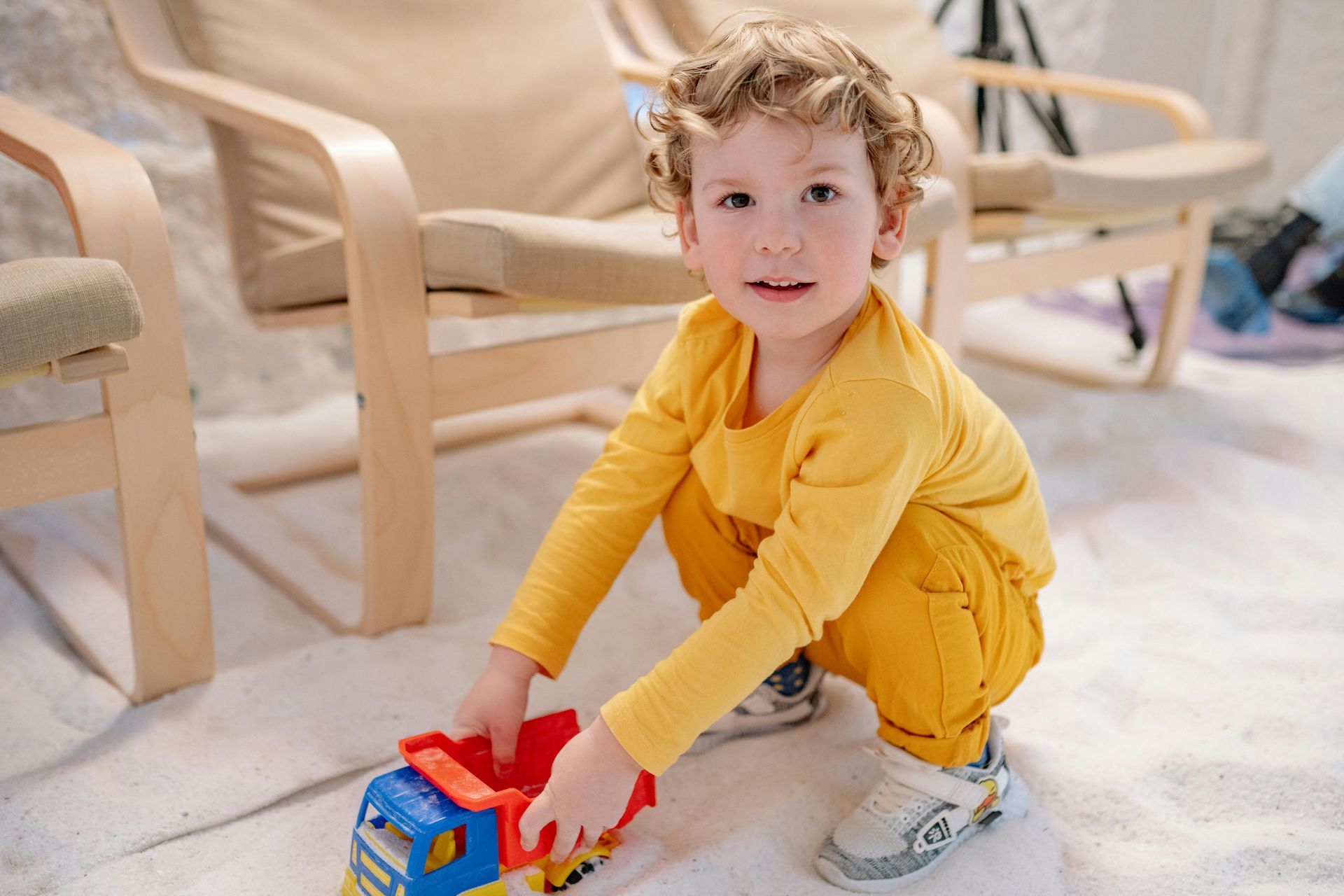
OT sessions for autistic children are almost always play-based and child-led, meaning the therapist follows your child's interests and builds therapeutic goals into activities your child is naturally motivated to engage with rather than imposing a rigid, adult-directed structure. If your child loves trains, sessions might involve building fine motor skills through train track assembly. If your child loves water play, sessions might use water-based sensory activities to build tolerance for different textures and temperatures. The goal is always for your child to experience therapy as engaging and safe, never as a series of demands to comply with.
Sessions typically begin with a sensory check-in to understand where your child's nervous system is that day, since regulation capacity varies significantly from day to day and even hour to hour. From there, the OT builds in activities that target the specific goals identified in your child's assessment, always adjusting in real time based on your child's responses. A skilled OT is constantly reading your child's nervous system and adapting the plan accordingly, rather than pushing through a predetermined script regardless of how your child is doing that day.
Why in-home OT works especially well for autistic children
In-home OT offers something a clinic simply cannot replicate for autistic children: the ability to build skills inside the actual environment where your child needs to use them. A clinic-based OT can teach your child to tolerate a new texture in a therapy room, but that skill needs to be rebuilt from scratch when your child encounters the same texture at home unless it was practiced there in the first place. When I work with your child in your home, the skills we build are immediately embedded in your child's real daily rhythm.
I can see your child's actual bedroom, their actual breakfast routine, their actual reaction to the specific sounds and textures of your home environment, and build a support plan around what is really happening rather than what happens in an unfamiliar clinic setting. And because you are present throughout every session, you develop a deep, practical understanding of your child's sensory and regulatory needs that empowers you to support them confidently between sessions and long after our work together ends.
Your child's differences are not something to fix
OT for autism is not about making your autistic child act more neurotypical. It is about building the skills, supports, and understanding that let your child participate fully in the life they want to live, on terms that respect who they actually are. Your child's neurology is not a problem to solve. It is a way of experiencing the world that deserves support, not correction.
At Play2Learn Plant2Grow, I offer in-home pediatric OT services across Miami and South Florida that meet your child where they are, inside your home, your routines, and your family's real rhythm. I work alongside you so that what we build together does not stay in the session. It becomes part of how your child moves through every day.
If you are looking for an occupational therapist in Miami, FL, I serve families across Coral Gables, Coconut Grove, Miami Beach, Brickell, Doral, and throughout South Florida.

Hi! I'm Erika Valdes Certified and Licensed Occupational Therapist (OTR)
Erika Valdes, OTR/L is a licensed occupational therapist with over 15 years of clinical experience supporting children and adolescents across school, home, and community environments.
Download my free guide