
Sensory Processing Disorder: What It Is, the Different Types, and Why Your Child's Brain Is Wired Differently
Your child covers their ears at sounds that no one else seems to notice. They refuse to wear anything with a seam. They crash into furniture, spin endlessly, or seek tight squeezes with an intensity that surprises you. Or maybe they seem unaware of pain, underbothered by temperatures that would make anyone else uncomfortable, slow to respond to the world around them in ways that worry you. Whatever you have been observing, you have probably wondered at some point whether your child experiences the world differently than other children do. The answer, if your child has sensory processing disorder, is yes. Profoundly, genuinely, and not by choice.
Sensory processing disorder is not a behavior problem. It is not a parenting problem. It is a neurological difference in how the brain receives, organizes, and responds to sensory information from the body and the environment. And understanding it, really understanding it, changes everything about how you see your child and how you support them.
This post is your complete guide to sensory processing disorder. You will find a clear explanation of what sensory processing actually is, a breakdown of the different types of SPD, a dedicated section for each type with its own detailed profile, and answers to the questions parents ask most often including whether SPD is related to autism, whether your child can lead a full and joyful life, and why your child's sensory differences might actually be one of their greatest strengths.
In case you are new here, I am Erika, a pediatric occupational therapist and the founder of Play2Learn Plant2Grow an in-home pediatric OT services. I work with children whose nervous systems need a different kind of support, and I work alongside the parents who love them, because that is where real understanding and real growth begin.
What is sensory processing and how does the brain do it
Sensory processing is the neurological process by which your brain takes in information from the world around you and from inside your own body, organizes it, and produces a response. Every single second of every single day, your nervous system is receiving an enormous stream of sensory data and making rapid, mostly unconscious decisions about what to pay attention to, what to ignore, and how to respond. When you are reading this sentence, your brain is simultaneously registering the feeling of the chair beneath you, the temperature of the room, the sounds around you, the position of your body in space, and hundreds of other signals, and filtering out the vast majority of them so that you can focus on the words in front of you.
Most people take this process completely for granted because it works smoothly and automatically. But the ability to filter, organize, and respond to sensory input is actually a highly complex neurological skill that develops gradually throughout childhood and depends on the healthy functioning of multiple brain systems working together. The sensory systems involved include the seven classic senses most people know, sight, hearing, touch, taste, and smell, plus two that most people have never heard of: the vestibular system which governs balance, movement, and spatial orientation, and the proprioceptive system which tells your brain where your body is in space and how much force your muscles are using. A third internal sense called interoception tells your brain what is happening inside your body, including hunger, thirst, heart rate, and the need to use the bathroom.
When all of these systems are communicating efficiently with each other and with the brain's regulatory centers, the result is a nervous system that feels organized, calm, and ready to engage with the world. When any part of this system is not working as efficiently as it could, the result is a nervous system that is either overwhelmed by input it cannot filter, starved of input it desperately needs, or both at different times and in different contexts. That is sensory processing disorder.
What is sensory processing disorder
Sensory processing disorder, commonly abbreviated SPD and sometimes called sensory integration disorder, is a neurological condition in which the brain has significant difficulty receiving, organizing, and responding to sensory information in a way that supports daily functioning. It was first described and systematically studied by occupational therapist and neuroscientist Dr. A. Jean Ayres in the 1960s and 1970s, whose work on sensory integration theory transformed the field of pediatric occupational therapy and gave families a framework for understanding why their children responded to the world so differently.
SPD is not currently listed as a standalone diagnosis in the DSM-5, which means it is not officially classified as a psychiatric disorder. However it is widely recognized by occupational therapists, pediatricians, and developmental specialists as a real and clinically significant condition that affects approximately one in six children to a degree that meaningfully impacts their daily functioning. SPD can exist on its own or co-occur with autism, ADHD, anxiety, developmental coordination disorder, and other neurodevelopmental conditions.
The most important thing to understand about SPD is that it is not one thing. It is a family of related but distinct conditions that each affect the nervous system differently, produce different symptoms, and require different therapeutic approaches. Understanding which type of SPD your child has is essential for building support that actually works.
What are neurodivergent sensory issues?
Neurodivergent is a term used to describe people whose brains develop and function differently from what is considered neurotypical. It is an umbrella term that includes autism, ADHD, dyslexia, dyspraxia, sensory processing disorder, and other conditions characterized by neurological differences rather than neurological deficits. Sensory issues are among the most common and most universal experiences across the neurodivergent community, and understanding them through a neurodivergent lens rather than a deficit lens changes everything about how we support the children who have them.
Neurodivergent sensory issues are not pathological responses to a normal world. They are normal responses to a world that was not designed for neurodivergent nervous systems. Fluorescent lighting, open-plan classrooms, polyester uniforms, cafeteria noise, and the expectation of sitting still for six hours were all designed with a neurotypical nervous system in mind. For a child whose nervous system processes sensory information differently, these ordinary features of the school environment can be genuinely exhausting, painful, and dysregulating. Supporting a neurodivergent child with sensory differences is not about fixing what is wrong with them. It is about creating the conditions in which their nervous system can function at its best.
Is SPD a form of autism?
SPD and autism are not the same thing, but they are closely related and frequently co-occur. Sensory processing differences are formally recognized in the DSM-5 as part of the diagnostic criteria for autism spectrum disorder, which means that virtually all autistic children have some degree of sensory processing difference. However the reverse is not true. Many children with SPD are not autistic. SPD can and frequently does exist independently in children who do not meet the criteria for autism or any other neurodevelopmental diagnosis.
The key distinction is that autism involves a broader profile of differences including social communication challenges and restricted or repetitive behaviors, whereas SPD is specifically about the processing of sensory information. A child can have significant sensory processing disorder without any of the social communication differences or restricted behavioral patterns that characterize autism. If you are wondering whether your child's sensory challenges might be part of a broader autism profile, an evaluation by a developmental pediatrician or child psychologist who specializes in autism assessment is the right next step alongside an OT evaluation.
The different types of sensory processing disorder
Researchers and clinicians have identified three main categories of SPD, each with subtypes that describe the specific ways the nervous system is processing sensory input differently. These categories are sensory modulation disorder, sensory-based motor disorder, and sensory discrimination disorder. Within these three categories there are six distinct subtypes, each one representing a different pattern of sensory processing difference with its own profile of strengths, challenges, and support needs.
Sensory modulation disorder is the most commonly recognized category. It describes difficulty regulating responses to sensory input, meaning the nervous system either overreacts, underreacts, or actively seeks additional input. Sensory-based motor disorder describes difficulty using sensory information to plan and execute coordinated physical actions. Sensory discrimination disorder describes difficulty distinguishing between different sensory signals, meaning the brain receives the information but cannot accurately interpret what it is sensing.
Each of the six subtypes is profiled in full detail below. Read through each one and notice which patterns feel most familiar for your child. Many children show characteristics of more than one type, which is completely normal and reflects the complexity of how sensory processing differences actually show up in real nervous systems.

Sensory over-responsivity
Sensory over-responsivity is the type of SPD that most people picture when they hear the words sensory issues. It is the most commonly recognized presentation and the one that tends to create the most visible challenges in daily life because the child's responses are so disproportionate to what others experience as ordinary input.
| Type | Sensory Modulation Disorder |
| What is it? | The nervous system responds to sensory input faster, stronger, and longer than the situation requires. Small inputs feel enormous. The nervous system cannot filter out irrelevant sensory information and treats most input as a potential threat. |
| How does it look in children? | Extreme distress over clothing textures, seams, or tags. Covering ears at ordinary sounds. Gagging at food textures. Avoiding touch or reacting with distress to unexpected contact. Meltdowns in busy or loud environments. Emotional responses that seem disproportionate to the trigger. |
| How to identify it? Daily life examples | Dressing: refuses certain fabrics, cannot tolerate tags, getting dressed takes forty-five minutes and ends in tears. Eating: gags at new textures, eats only a few safe foods, cannot sit in a busy cafeteria. School: overwhelmed by hallway noise, needs to sit away from sensory stimulation to focus, distressed by fluorescent lighting or strong smells. |
| What is happening in their brain? | The amygdala, the brain's threat detection center, is over-activated in response to sensory input. The prefrontal cortex cannot sufficiently regulate that activation. The nervous system runs a low-grade threat response to ordinary sensory information, keeping the child in a chronic state of sympathetic nervous system activation. |
| Recommended therapy | Sensory integration therapy with a pediatric OT trained in the Ayres Sensory Integration framework. |
| What can you do at home? | Create a calm corner where your child can retreat when overwhelmed. Use weighted blankets or compression clothing for organizing proprioceptive input. Give advance notice before transitions. Allow clothing choices that respect your child's sensory needs. Reduce visual and auditory clutter in your home environment. |
| Your child superpower | Extraordinary sensory awareness and sensitivity. Children with SOR often notice details, beauty, and subtleties in the world that others walk right past. They are frequently deeply empathetic, highly intuitive, and acutely attuned to the emotional atmosphere of a room. Their sensitivity, when supported rather than suppressed, becomes a profound gift for art, music, nature, and human connection. |
Sensory under-responsivity
Sensory under-responsivity is the type of SPD that is most often missed because the child is not disruptive. They are quiet, slow to respond, and easily overlooked in a busy classroom or a busy household. But their nervous system is working just as hard as an over-responsive child's, just in a different direction.
| Type | Sensory Modulation Disorder |
| What is it? | The nervous system responds to sensory input more slowly and weakly than typical. The brain is not registering incoming sensory signals at the level needed to produce an alert, engaged response. The child appears disconnected, slow, or unaware. |
| How does it look in children? | Appears unaware of pain, temperature, or injury. Does not notice when their face is dirty or clothing is twisted. Seems slow to respond or difficult to engage. Appears lethargic, unmotivated, or disconnected. May seem in their own world for long periods. |
| How to identify it? Daily life examples | Dressing: does not notice their shirt is on backward or shoes are on the wrong feet. Eating: does not seem to notice food on their face or spills on their clothing, may not register hunger or fullness signals clearly. School: appears disengaged, needs significantly more stimulation than peers to become alert and focused, frequently described as a daydreamer. |
| What is happening in their brain? | The reticular activating system, which regulates arousal and alertness, is under-activated. The brain's sensory registration threshold is too high, meaning sensory signals need to be significantly more intense than typical to reach the level of conscious awareness and produce a response. |
| Recommended therapy | Sensory integration therapy focused on providing alerting sensory input to raise the nervous system's arousal level. |
| What can you do at home? | Offer alerting sensory input before demanding tasks: jumping, bouncing, crunchy snacks, cold water, bright lighting, upbeat music. Keep the environment more stimulating than you might naturally choose. Use movement breaks frequently. Engage your child with high-energy, multisensory activities that activate their nervous system. |
| Your child superpower | An extraordinary capacity for calm, steadiness, and self-containment. Children with SUR are often deeply focused in their inner world, highly creative, and able to maintain equanimity in situations that overwhelm other children. Their internal richness and ability to tune out the world can become a remarkable strength for deep work, imagination, and independent thinking. |
Sensory seeking and craving
Sensory seeking is the type of SPD most often mislabeled as hyperactivity or defiance. These children are not out of control. Their nervous system is genuinely hungry for input, and every crash, squeeze, and movement is an attempt to feed that hunger. Understanding this reframes everything about how you respond to their behavior.
| Type | Sensory Modulation Disorder |
| What is it? | The nervous system craves intense and frequent sensory input because ordinary levels of input are not enough to reach the brain's threshold for registration. The child is in a constant search for more input across one or multiple sensory systems. |
| How does it look in children? | Constant movement, crashing, and climbing. Seeking very tight hugs or deep pressure. Mouthing objects past the expected age. Making loud noises, touching everything, unable to sit still. May appear hyperactive but the drive is sensory rather than purely attentional. |
| How to identify it? Daily life examples | Dressing: constantly touching their clothing or the clothing of others, seeks tight waistbands or heavy fabrics for deep pressure input. Eating: seeks very crunchy, spicy, or intensely flavored foods, may overstuff their mouth. School: cannot stay in their seat, touches everything on the desk, needs to move constantly, disrupts peers through physical contact. |
| What is happening in their brain? | The brain's sensory registration threshold is elevated, similar to under-responsivity, but the nervous system compensates by actively seeking the intense input it needs. The child's behavior is driven by a genuine neurological need for more input rather than by choice or defiance. |
| Recommended therapy | Sensory integration therapy focused on providing organized, intense proprioceptive and vestibular input through therapeutic activities. |
| What can you do at home? | Provide heavy work activities before situations that require sitting still: carrying a backpack, doing wall push-ups, jumping on a trampoline. Offer a fidget tool during seated activities. Build in regular movement breaks. Create designated spaces where seeking behavior is safe and encouraged, like a crash pad or a sensory corner with resistive materials. |
| Your child superpower | Extraordinary energy, curiosity, and physical bravery. Sensory seeking children are often the most adventurous, the most willing to try new experiences, and the most physically capable in their peer group once their sensory needs are met. Their drive and intensity, channeled into the right activities, become fuel for athletic achievement, creative exploration, and leadership. |
Postural disorder
Postural disorder is one of the less talked about types of SPD and one of the most impactful on a child's daily life at school. When a child cannot maintain stable upright posture without significant effort, every seated task becomes a physical challenge before it is even an academic or behavioral one.
| Type | Sensory-Based Motor Disorder |
| What is it? | The nervous system has difficulty using vestibular and proprioceptive input to maintain stable posture and muscle tone. The child struggles to stabilize their body against gravity and to sustain the postural control that daily activities require. |
| How does it look in children? | Low muscle tone, slouching, and difficulty sitting upright without support. Fatigues quickly during physical activity. Leans on furniture, walls, or people. Appears floppy or loose in their movements. Has difficulty with balance and coordination during everyday activities. |
| How to identify it? Daily life examples | Dressing: difficulty managing fasteners because unstable proximal joints affect distal hand control. Eating: slumps over the table during meals, holds their head in their hands to stabilize, tires quickly during mealtimes. School: cannot sit upright in their chair without leaning, fatigues quickly during seated work, frequently described as lazy or unmotivated when they are actually physically exhausted. |
| What is happening in their brain? | The vestibular and proprioceptive processing centers of the brain are not providing the body with accurate enough information about its position in space and the state of its muscles and joints to maintain stable postural control without significant conscious effort. |
| Recommended therapy | Sensory integration therapy focused on vestibular and proprioceptive processing and core stability. Coordination with physical therapy where indicated. |
| What can you do at home? | Use seating adaptations like a wobble cushion or a chair with armrests to provide additional postural support. Incorporate heavy work activities that build core strength into daily routines. Allow your child to lie on their stomach on the floor for some activities. Avoid expecting your child to sit upright without support for long periods without a break. |
| Your child superpower | A deep awareness of the physical world and a remarkable adaptability. Children with postural disorder often develop creative compensatory strategies and an intimate understanding of their own body that other children never develop. When their core and postural needs are supported, they frequently become highly body-aware, mindful movers who bring a thoughtful quality to everything physical they do. |
Dyspraxia (sensory-based motor disorder)
Dyspraxia is one of the most misunderstood types of SPD because the child's intelligence and motivation are clearly present, yet they consistently struggle with physical tasks that seem like they should be simple. Understanding that dyspraxia is a motor planning challenge rather than a motor execution challenge changes everything about how you support your child.
| Type | Sensory-Based Motor Disorder |
| What is it? | The nervous system has difficulty using sensory information to plan, sequence, and execute new or unfamiliar motor actions. The child knows what they want their body to do but has difficulty getting it to do it reliably, especially for novel tasks. |
| How does it look in children? | Appears clumsy or accident-prone. Has difficulty learning new physical skills even with repeated practice. Struggles with tasks that require sequencing physical steps. Avoids new physical challenges. May be articulate and bright but described as physically awkward or uncoordinated. |
| How to identify it? Daily life examples | Dressing: cannot sequence the steps of getting dressed without verbal or visual prompting every time, even after months of practice. Eating: has difficulty using utensils, frequently drops food, struggles with the motor planning of self-feeding with new tools. School: difficulty with handwriting, scissors, and navigating the physical demands of the classroom, may know the answer but cannot get it onto the page efficiently. |
| What is happening in their brain? | The praxis system, which involves the sensory, motor, and cognitive processes required to conceive, plan, and execute a novel motor action, is not functioning efficiently. The brain has difficulty forming an internal model of the action, organizing the body to execute it, and adapting the movement based on sensory feedback. |
| Recommended therapy | Sensory integration therapy using the just-right challenge principle, offering activities that are novel and complex enough to require genuine motor planning without producing failure and avoidance. Occupational therapy with a focus on sequencing, motor learning, and building confidence in physical competence. Visual schedules and step-by-step support for daily routines. |
| What can you do at home? | Break all new physical tasks into very small, explicit steps and practice each step separately before putting them together. Use visual schedules and checklists for self-care routines. Allow more time and more practice than you think should be necessary without frustration. Celebrate small steps toward new physical skills. Reduce pressure around trying new physical activities. |
| Your child superpower | An extraordinary capacity for learning through observation, creativity in problem-solving, and deep empathy for others who struggle with physical challenges. Children with dyspraxia often develop remarkable verbal, creative, and intellectual abilities precisely because they cannot rely on automatic physical competence. Their thoughtfulness and persistence become some of their greatest strengths. |
Sensory discrimination disorder
Sensory discrimination disorder is the least recognized type of SPD and the one that most frequently goes unidentified because its effects look so similar to inattention or cognitive challenges. The issue is not that the child is not paying attention. It is that the sensory information their brain is receiving is not clear enough to act on accurately.
| Type | Sensory Discrimination Disorder |
| What is it? | The nervous system receives sensory input but cannot accurately interpret the details of what it is sensing. The child has difficulty distinguishing between similar sensory signals, which affects their ability to use their body and their environment effectively. |
| How does it look in children? | Has difficulty identifying objects by touch without looking. Cannot tell where they have been touched without looking. Confuses similar sounds. Has difficulty with fine motor tasks that require precise sensory feedback. May seem inattentive when the issue is actually sensory interpretation rather than attention. |
| How to identify it? Daily life examples | Dressing: cannot identify which item of clothing they are holding without looking at it, has difficulty orienting clothing correctly by feel. Eating: has difficulty using utensils accurately because they cannot feel precisely where the fork is in their hand, may use their fingers more than expected. School: difficulty with handwriting because they cannot feel the pencil clearly enough to control it well, may struggle to distinguish between similar letter sounds or shapes. |
| What is happening in their brain? | The sensory cortices that process and interpret the details of sensory signals are not discriminating efficiently between similar inputs. The brain receives the signal but cannot accurately decode it, similar to receiving a message in a language you know but cannot quite read clearly enough to fully understand. |
| Recommended therapy | Sensory integration therapy focused on improving the quality and accuracy of sensory discrimination through targeted sensory experiences. Fine motor therapy that builds the tactile discrimination skills that precise hand use depends on. Parent coaching on how to provide rich sensory experiences that support discrimination development in daily life. |
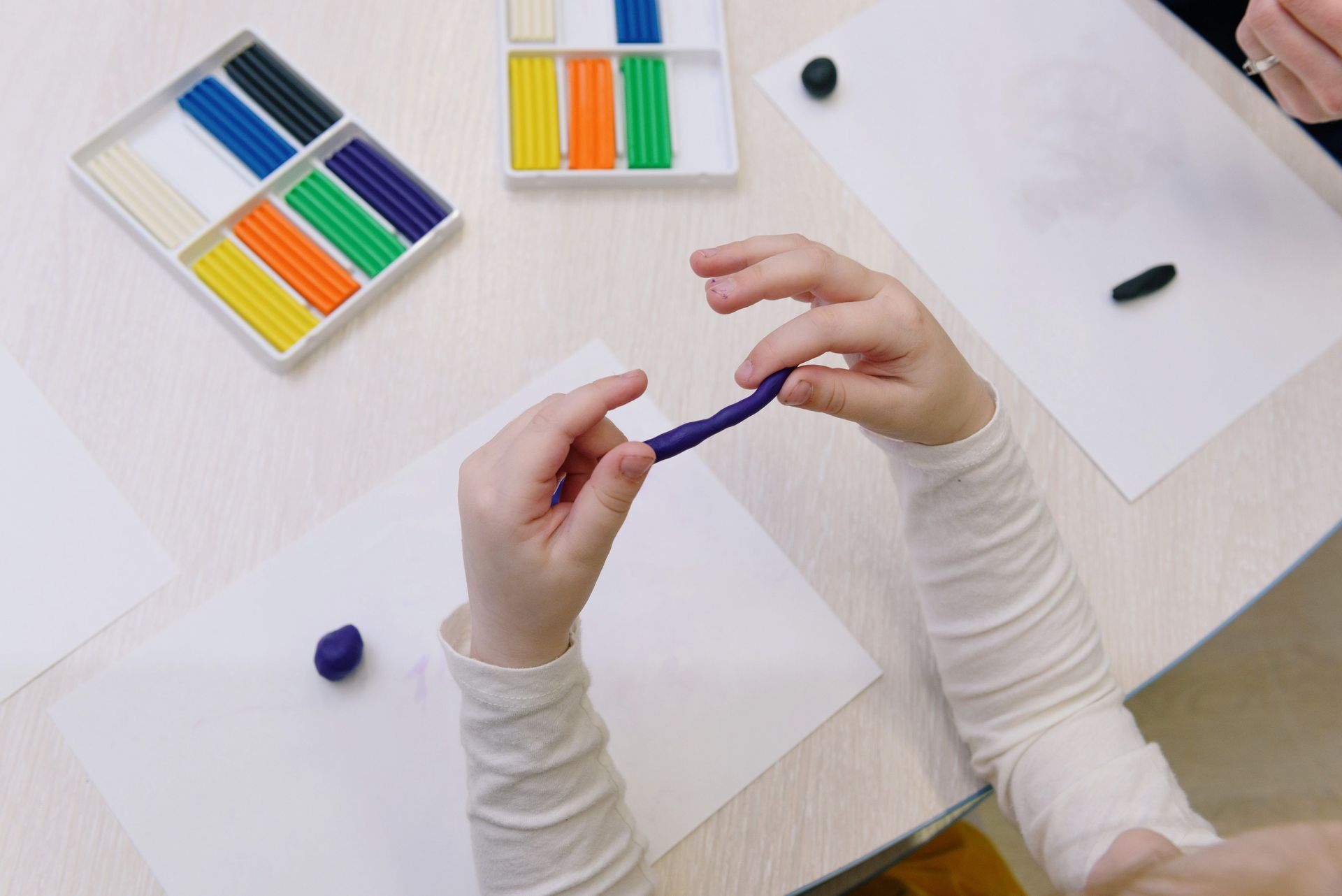
| What can you do at home? | Provide rich tactile experiences through play: sensory bins, playdough, kinetic sand, finger painting, and water play. Practice identifying objects by touch in a bag without looking, as a game. Provide clear, explicit sensory feedback during daily tasks. Use multisensory approaches to learning that do not rely solely on one sensory channel. |
| Your child superpower | A heightened ability to compensate through other sensory channels and to develop rich multisensory strategies for engaging with the world. Children with SDD often become remarkably resourceful, visually acute, and cognitively flexible because they learn from an early age to gather information from multiple sources simultaneously. Their adaptability and creative problem-solving are genuine strengths that serve them throughout life. |
Can a child with sensory processing disorder lead a normal life?
Yes. Absolutely and completely yes. With the right understanding, the right support, and the right environment, children with sensory processing disorder grow into adults who live full, rich, connected, and deeply meaningful lives. SPD does not disappear as children grow older, but what changes is the child's capacity to understand their own nervous system, advocate for their own needs, and create the conditions that allow them to function at their best.
The children who struggle most with SPD as they grow older are those whose sensory differences were never understood or supported, who spent years being told they were too sensitive, too dramatic, or too difficult, and who internalized those messages as truths about themselves. The children who thrive are those who were met with curiosity rather than frustration, who received early and appropriate support, and who grew up understanding that their nervous system is not broken. It is different. And different, with the right support, is not a limitation. It is a way of being in the world that comes with its own profound gifts.
When to seek occupational therapy for sensory processing disorder
If your child's sensory differences are affecting their daily functioning consistently across multiple settings including home, school, and social situations, that is enough of a reason to seek an OT evaluation. You do not need a formal diagnosis. You do not need your child to be in crisis. You need to be noticing a pattern that is affecting your child's quality of life and your family's daily rhythm on a regular basis.
Specific signs that an OT evaluation is the right next step include meltdowns that are consistently triggered by sensory experiences, a diet that is becoming more restricted rather than expanding, increasing avoidance of physical activities or social situations due to sensory discomfort, significant difficulty with self-care routines, and a child who seems chronically exhausted by the sensory demands of their day in a way that their peers do not appear to be. Early support makes an enormous difference. The brain is most neuroplastic in the early years, which means sensory integration therapy produces its most significant results when it begins early. But it is never too late to start.
Your child is not too sensitive, they are perfectly wired for the right support
Your child's sensory differences are not a flaw in their design. They are a feature of a nervous system that processes the world differently, more intensely, more creatively, and more richly than the neurotypical average. What they need is not to be less of who they are. They need support that meets their nervous system where it actually is, that reduces the daily friction of living in a world not designed for them, and that gives their extraordinary qualities the space to grow. What you water, grows. That includes your child's confidence, their self-understanding, and the extraordinary things they are already capable of becoming.
At Play2Learn Plant2Grow, I offer in-home pediatric OT services across Miami and South Florida that meet your child where they are, inside your home, your routines, and your family's real rhythm. I work alongside you so that what we build together does not stay in the session. It becomes part of how your child moves through every day.
If you are looking for an occupational therapist in Miami, FL, I serve families across Coral Gables, Coconut Grove, Miami Beach, Brickell, Doral, and throughout South Florida.

Hi! I'm Erika Valdes Certified and Licensed Occupational Therapist (OTR)
Erika Valdes, OTR/L is a licensed occupational therapist with over 15 years of clinical experience supporting children and adolescents across school, home, and community environments.
Download my free guide