
Fine Motor Skills and Occupational Therapy: What Every Parent Should Know
You noticed it in a quiet moment. Maybe it was the way your child held their crayon, wrapped in a fist instead of pinched between their fingers. Maybe it was watching your child struggle to button their jacket while every other child in the room moved on without a second thought. Maybe it was the scissors that would not cooperate no matter how many times you practiced together. Whatever the moment was, something told you this was worth paying attention to. And you were right.
Fine motor skills are one of the earliest and most telling windows into your child's development. They show up in everything your child does, from the way they pick up a blueberry at breakfast to the way they manage a pencil at school. When fine motor development is delayed or uneven, the effects ripple through your child's confidence, their independence, and their ability to keep up with the world around them. The good news is that fine motor skills can always be built, no matter where your child is starting from.
This post is your clear and practical guide to understanding what fine motor skills actually are, knowing what to look for at every age, and finding out what you can do right now to support your child at home. And when home practice is not enough, you will know exactly what to do next.
In case you are new here, I am Erika, a pediatric occupational therapist and the founder of Play2Learn Plant2Grow an in-home pediatric OT service. I work with children and their families inside their homes, their routines, and their real daily rhythms because I believe that is where real growth happens. If something in your child's development has caught your attention, you are in the right place.
What are fine motor skills?
Fine motor skills are the small, precise movements that involve your child's hands, fingers, and wrists working together with their eyes and their brain. They are not just hand skills. They are the result of an entire developmental chain that starts at the center of your child's body and works its way outward to the fingertips. When parents understand this, so much of what they have been observing in their child suddenly starts to make sense.
Every time your child picks up a crayon, turns a page, pours water from a cup, or manages a zipper, they are calling on a complex network of skills that took months and years to develop. When any part of that network is underdeveloped, the whole task becomes harder than it needs to be. And your child feels that difficulty, even if they cannot name it.
Fine motor skills examples every parent should recognize
The big six fine motor skills that occupational therapists assess are grasping and gripping, pinching and in-hand manipulation, hand-eye coordination, bilateral coordination which means using both hands together, wrist stability and rotation, and tool use including pencils, scissors, and utensils. These six skills underlie almost every fine motor task your child encounters in daily life.
Signs your child may have a fine motor delay
When it comes to grip and grasp, watch for a child who uses a fisted grip on the crayon past age three, who switches hands frequently during a single task, who drops objects often, or who cannot isolate their fingers for pointing or pinching. These are early signals that the foundational grip patterns are not yet where they need to be.
When it comes to endurance and strength, notice whether your child fatigues quickly during drawing or writing tasks, whether they actively avoid fine motor activities, or whether they complain that their hand hurts after minimal use. A child who gives up quickly is often a child whose hands are working much harder than they should have to.
When it comes to coordination and precision, look at whether your child is managing buttons, zippers, and snaps at the ages when most children handle them independently. Watch their scissor use, their ability to color inside lines, and their management of utensils at mealtimes. Consistent struggles across more than one of these areas is meaningful information.
When it comes to sensory signals, pay attention to whether your child avoids touching certain textures like playdough, sand, or glue, whether they press extremely hard when holding a pencil, or whether they seem over or under responsive to touch in their hands. Sensory processing and fine motor development are deeply connected, and addressing one without the other rarely produces lasting results.
Fine motor skills development chart by age
One of the most common things parents ask me is whether their child is where they should be. The chart below gives you a clear, age-by-age reference for fine motor development from birth through age ten. Use it as a general guide rather than a strict checklist. Every child develops at their own pace, and one missed milestone in isolation is rarely cause for concern. What matters is the pattern across multiple areas and multiple ages.
| Age | Key Fine Motor Milestones | What It Looks Like in Daily Life |
|---|---|---|
| 0 to 3 months | Reflexive grasp, begins to open and close hands | Grips your finger, bats at objects near their face |
| 4 to 6 months | Reaches for objects, transfers between hands, raking grasp | Grabs a toy and moves it from one hand to the other |
| 7 to 12 months | Pincer grasp emerges, points with index finger, bangs objects together | Picks up small food pieces, points at things they want |
| 1 to 2 years | Stacks 2 to 4 blocks, scribbles, holds crayon in fist, turns pages in chunks | Scribbles on paper, stacks blocks, feeds self with fingers |
| 2 to 3 years | Strings large beads, snips with scissors, holds crayon with fingers, copies vertical lines | Uses a spoon independently, begins using scissors with help |
| 3 to 4 years | Copies circles and crosses, uses scissors to cut across paper, dresses with minimal help | Draws a person with 2 to 4 parts, manages large buttons |
| 4 to 5 years | Cuts on a line, copies squares and triangles, writes some letters, manages utensils | Colors inside lines, writes their name, uses a fork and knife |
| 5 to 6 years | Ties simple knots, writes all letters, colors with control, manages small fasteners | Writes their name neatly, ties shoes with help, uses scissors accurately |
| 6 to 8 years | Writes sentences, draws with detail, manages all fasteners independently | Completes written schoolwork, ties shoes independently, uses tools confidently |
| 8 to 10 years | Refined handwriting, complex drawing, independent self-care | Writes neatly and quickly, manages all self-care tasks without assistance |
If your child is consistently missing milestones across multiple categories, that is worth exploring with a pediatric OT. Early support builds the foundation that makes everything else easier, and there is no such thing as starting too soon.
At-home fine motor activities
For ages 0 to 3 months
| Activity | How to Do It | What It Builds |
|---|---|---|
| Finger grasp practice | Place your finger gently in your baby's palm and let them grip it. Repeat on both hands. | Reflexive grasp, hand awareness |
| Tummy time on a textured surface | Place a soft textured blanket or mat under your baby during tummy time. Let their hands feel different surfaces. | Core and shoulder stability, tactile awareness |
| Hand to face exploration | During calm alert periods, let your baby bring their hands to their mouth and face without redirecting them. | Hand-mouth coordination, body awareness |
| Gentle hand massage | Slowly massage each finger and the palm of your baby's hand using gentle pressure. Both hands equally. | Tactile processing, sensory regulation |
| High contrast visual tracking | Hold a high contrast black and white card or toy about 8 to 12 inches from your baby's face and move it slowly side to side. | Visual tracking, foundation for hand-eye coordination |
For ages 3 to 6 months
| Activity | How to Do It | What It Builds |
|---|---|---|
| Reaching for hanging toys | Hang colorful toys just within reach during tummy time or while your baby lies on their back. Let them bat and grab. | Intentional reaching, shoulder strength, hand-eye coordination |
| Two-handed object exploration | Offer a toy to one hand, then offer another toy to the other hand and watch your baby begin to transfer. | Bilateral coordination, object permanence |
| Textured toy mouthing | Offer safe textured toys of different shapes and materials. Let your baby bring them to their mouth freely. | Oral motor development, tactile discrimination, grasp patterns |
| Supported sitting with toy play | Support your baby in a seated position with a rolled blanket and place toys just in front of them to reach for. | Core stability, weight-bearing through arms, reaching |
| Hand clapping songs | Gently guide your baby's hands together in a clapping motion during a simple song or rhyme. | Bilateral coordination, rhythm, social engagement |
For ages 6 to 9 months
| Activity | How to Do It | What It Builds |
|---|---|---|
| Object transfer practice | Hand your baby a small block or soft toy in one hand. Watch and encourage them to move it to the other hand. | Bilateral coordination, in-hand manipulation |
| Container play | Place a few large soft objects in a container and let your baby take them out and put them back in repeatedly. | Grasp and release, cause and effect, wrist rotation |
| Finger food exploration | Offer soft, safe finger foods like small pieces of banana or cooked sweet potato. Let your baby practice picking them up. | Pincer grasp development, hand-eye coordination |
| Banging and knocking | Give your baby two objects they can bang together or knock against a surface. Let them explore force and sound. | Bilateral coordination, hand strength, cause and effect |
| Index finger pointing and poking | Place a soft toy with buttons or textures in front of your baby and encourage them to poke and press with one finger. | Isolated finger use, tactile discrimination |
| Peek-a-boo with cloth | Place a light cloth over a toy and encourage your baby to pull it off to reveal what is underneath. | Intentional grasp, wrist control, problem solving |
For ages 9 to 12 months
| Activity | How to Do It | What It Builds |
|---|---|---|
| Pincer grasp with small objects | Place small, safe objects like cereal pieces or soft pom poms on a tray and let your baby pick them up one by one. | Pincer grasp refinement, finger isolation |
| Simple shape sorter | Offer a large, simple shape sorter with two or three shapes. Guide your baby's hands gently if needed. | In-hand manipulation, problem solving, wrist rotation |
| Stacking two blocks | Stack two large soft blocks and knock them down together. Then hand your baby the blocks and let them try. | Grasp and release, hand-eye coordination, bilateral play |
| Page turning in board books | Read board books together and guide your baby to help turn each thick page. | In-hand manipulation, pincer grasp, wrist control |
| Dropping objects into a container | Hold a container open and let your baby drop small safe objects in one at a time. Make it a game. | Controlled release, hand-eye coordination, cause and effect |
For ages 1 to 2 years
| Activity | How to Do It | What It Builds |
|---|---|---|
| Stacking and knocking blocks | Stack 3 to 6 large blocks together and let your toddler knock them down, then try stacking themselves. | Grasp and release, hand-eye coordination, bilateral play |
| Finger painting | Spread washable paint on a large piece of paper and let your toddler explore with both hands freely. | Tactile processing, bilateral coordination, creative expression |
| Large peg puzzles | Offer simple wooden peg puzzles with large knobs. Let your toddler pull pieces out and put them back. | Pincer grasp, in-hand manipulation, problem solving |
| Pouring water play | In the bath or at a water table, give your toddler small cups to pour water between. Let them experiment freely. | Wrist rotation, bilateral coordination, cause and effect |
| Pushing and pulling toys | Offer push and pull toys that require your toddler to grip, steer, and navigate with both hands. | Grip strength, bilateral coordination, gross and fine motor integration |
| Scribbling with large crayons | Offer large triangular or chunky crayons and a big piece of paper. Let your toddler scribble freely without direction. | Grasp patterns, wrist control, early mark making |
For ages 2 to 4 years
| Activity | How to Do It | What It Builds |
|---|---|---|
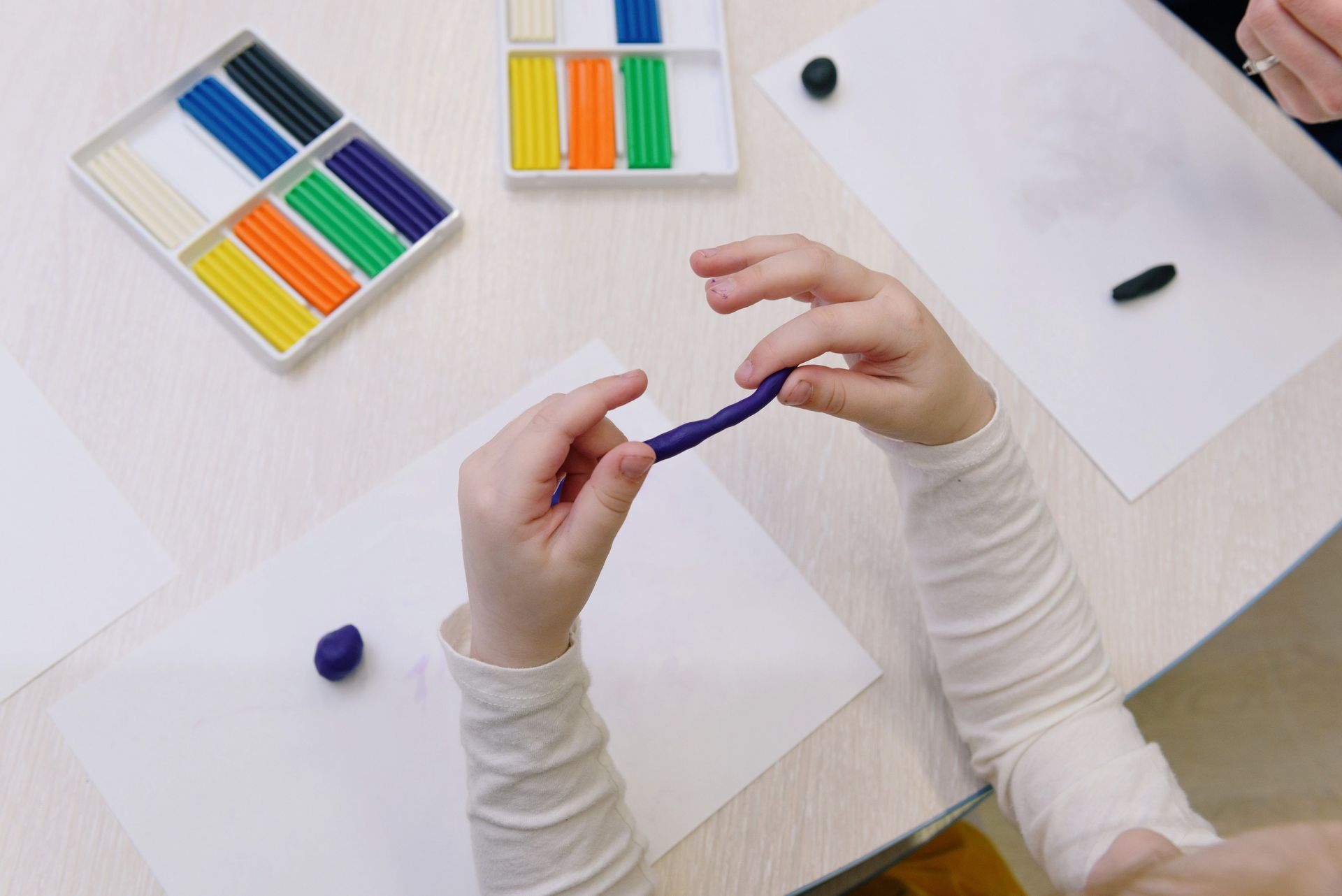
| Playdough pinching and rolling | Give your child a ball of playdough and encourage them to pinch, roll, squeeze, and poke it. No instruction needed, just play. | Hand strength, in-hand manipulation, sensory processing |
| Large bead threading | Offer large wooden beads and a thick lace. Let your child thread them onto the lace independently. | Bilateral coordination, pincer grasp, hand-eye coordination |
| Tearing and scrunching paper | Give your child old magazines or newspaper and let them tear, scrunch, and ball up the pieces freely. | Hand strength, in-hand manipulation, bilateral coordination |
| Snipping with safety scissors | Offer child-safe scissors and strips of paper or playdough. Teach your child to snip across in one cut. | Scissor skill foundation, hand strength, bilateral coordination |
| Drawing in shaving cream | Spread shaving cream on a tray or smooth surface and let your child draw shapes and lines with their fingers. | Tactile discrimination, letter and shape formation, sensory regulation |
| Transferring with a spoon | Place small pompoms or dried beans in one bowl and have your child transfer them to another bowl using a spoon. | Wrist stability, hand-eye coordination, tool use |
For ages 4 to 5 years
| Activity | How to Do It | What It Builds |
|---|---|---|
| Cutting along lines | Draw simple straight and curved lines on paper and have your child practice cutting along them with safety scissors. | Scissor control, bilateral coordination, visual motor integration |
| Lacing cards | Use store-bought or homemade lacing cards and have your child thread the lace through each hole in sequence. | Bilateral coordination, in-hand manipulation, hand-eye coordination |
| Transferring with tongs or tweezers | Place small objects in a muffin tin and have your child move them using child-safe tongs or tweezers. | Pincer strength, precision, hand-eye coordination |
| Drawing mazes | Draw simple mazes on paper and have your child navigate through them with a pencil without touching the walls. | Pencil control, visual motor integration, sustained attention |
| Dressing practice with real fasteners | Practice buttoning, zipping, and snapping on a dressing frame or on your child's own clothes during calm moments. | In-hand manipulation, bilateral coordination, independence |
| Stamping and printing | Use simple rubber stamps and an ink pad. Let your child press and stamp with controlled pressure on paper. | Wrist stability, hand-eye coordination, controlled force |
For ages 5 to 6 years
| Activity | How to Do It | What It Builds |
|---|---|---|
| Writing letters in sand or rice | Fill a shallow tray with sand or rice and have your child practice writing letters and numbers with their finger. | Letter formation, tactile feedback, sensory regulation |
| Folding paper | Start with simple folds and work toward basic origami shapes. Guide your child to crease each fold precisely. | Bilateral coordination, precision, following visual sequences |
| Using a hole punch | Give your child a single hole punch and pieces of paper to punch. Let them create patterns or punch along a drawn line. | Hand strength, bilateral coordination, tool use |
| Cutting out shapes | Draw simple shapes on paper and have your child cut them out as accurately as they can. | Scissor precision, visual motor integration, sustained effort |
| Chalk writing on a vertical surface | Tape paper or use a chalkboard at shoulder height and have your child write letters and draw shapes standing up. | Shoulder stability, wrist extension, letter formation |
| Simple sewing cards | Use a sewing card with pre-punched holes and a blunt needle with yarn. Have your child sew in and out of each hole. | Bilateral coordination, in-hand manipulation, precision |
For ages 7 to 8 years
| Activity | How to Do It | What It Builds |
|---|---|---|
| Basic origami | Follow simple origami instructions together to make animals or shapes. Focus on precise, clean folds. | Bilateral coordination, precision, visual sequencing |
| Weaving with paper strips | Cut strips of paper and have your child weave them over and under in a simple pattern on a base sheet. | Bilateral coordination, in-hand manipulation, sustained attention |
| Building with small construction sets | Use sets like LEGO or magnetic tiles with smaller pieces. Encourage your child to follow a plan or build their own design. | Fine motor precision, bilateral coordination, planning and execution |
| Journaling with illustration | Encourage your child to write a few sentences and draw a detailed illustration each day. No prompts needed, just space. | Handwriting endurance, pencil control, creative expression |
| Rubber band art | Use a geoboard or a piece of wood with small nails and let your child stretch rubber bands between points to create shapes. | Finger strength, bilateral coordination, spatial planning |
For ages 8 to 9 years
| Activity | How to Do It | What It Builds |
|---|---|---|
| Model building | Work on a simple model kit together. Focus on small piece placement, gluing, and following sequential instructions. | Fine motor precision, bilateral coordination, sustained focus |
| Calligraphy or brush lettering | Introduce a basic calligraphy set or brush pen and practice simple letters with controlled strokes. | Pencil pressure control, wrist stability, letter formation refinement |
| Knitting or finger knitting | Teach your child finger knitting with yarn or introduce simple knitting needles. Start with a basic cast-on and knit stitch. | Bilateral coordination, in-hand manipulation, fine motor endurance |
| Cooking tasks with fine motor demands | Involve your child in tasks like peeling, chopping soft foods with a child-safe knife, measuring, and squeezing citrus. | Tool use, bilateral coordination, wrist strength and control |
| Detailed drawing or zentangle | Encourage your child to fill a page with detailed patterns, zentangle designs, or illustrated scenes with fine detail. | Pencil control, sustained attention, fine motor endurance |
For ages 9 to 10 years
| Activity | How to Do It | Builds |
|---|---|---|
| Beading and jewelry making | Use small beads, wire, or elastic cord to create bracelets or patterns. Encourage increasingly complex designs. | Pincer precision, bilateral coordination, sustained fine motor control |
| Advanced origami | Move beyond basic folds into intermediate origami models. Focus on accuracy, clean creases, and following multi-step diagrams. | Precision, bilateral coordination, visual spatial processing |
| Embroidery or cross-stitch | Introduce a simple embroidery hoop, fabric, and needle with thread. Start with basic stitches and a simple pattern. | Bilateral coordination, in-hand manipulation, fine motor endurance |
| Carving or sculpting with clay | Use air-dry clay or polymer clay to sculpt small detailed figures. Encourage your child to use tools for fine detail work. | Hand strength, precision, tool use, creative planning |
| Typing and keyboard skills | Practice proper finger placement on a keyboard using a free typing program. Focus on accuracy before speed. | Finger isolation, bilateral coordination, hand-eye coordination |
| Woodworking basics | With supervision, let your child use a small hammer, nails, and soft wood to build a simple project. | Hand strength, tool use, bilateral coordination, sustained precision |
The best fine motor activity is the one your child will actually do. Follow their interest. If your child loves dinosaurs, sort small dinosaur figures into cups. If your child loves cooking, let them tear herbs and squeeze lemons. The skill is in the action, not the toy. What you water, grows. That includes your child's development and your confidence as the parent who knows how to support it.
When to consider occupational therapy for fine motor skills
Consider reaching out to a pediatric OT if your child is consistently behind on two or more milestones in the development chart above, if home activities have not produced noticeable progress after four to six weeks of consistent practice, or if your child is showing emotional distress around fine motor tasks including avoidance, meltdowns, or crying during writing or dressing. If your child's teacher has raised concerns about handwriting, scissor use, or classroom participation, that is also worth acting on sooner rather than later.
Your child's hands are capable of more than you know
At Play2Learn Plant2Grow, I offer in-home pediatric OT services across Miami and South Florida that meet your child where they are, inside your home, your routines, and your family's real rhythm. I work alongside you so that what we build together does not stay in the session. It becomes part of how your family moves through every day.
If you are looking for an occupational therapist in Miami, FL, I serve families across Coral Gables, Coconut Grove, Miami Beach, Brickell, Doral, and throughout South Florida.

Hi! I'm Erika Valdes Certified and Licensed Occupational Therapist (OTR)
Erika Valdes, OTR/L is a licensed occupational therapist with over 15 years of clinical experience supporting children and adolescents across school, home, and community environments.
Download my free guide