
What is an OT evaluation and what can families expect from the process?
Someone finally said the words. Your pediatrician, your child's teacher, a specialist you saw for the first time last week. They looked at you across the table and said: "I think an OT evaluation would be really helpful for your child." And in that moment you felt two things at once. Relief, because someone is finally taking what you have been noticing seriously. And anxiety, because now you have no idea what comes next. What will they actually do? Will my child cooperate? What does the report say and what does it mean? What happens after? If those questions are running through your mind right now, this blog is for you.
An OT evaluation is not a verdict. It is a starting point. It is the clearest, most structured way to understand what your child's nervous system, body, and daily function actually need so that the support you put in place actually works. By the time you finish reading, you will know exactly what a pediatric OT evaluation involves, what the report looks like, how to prepare, and what to do with the information once you have it.
In case you are new here, I am Erika, a pediatric therapist based in Miami, and I conduct in-home OT evaluations for children across the developmental spectrum. If you want to understand the broader scope of what I do, you can start with occupational therapy for children and see how I approach every child as a whole person with a whole nervous system worth understanding deeply.
What is an OT evaluation and how is it different from an assessment?
The terms evaluation and assessment are often used interchangeably in pediatric therapy contexts, but there is a meaningful distinction worth understanding. An assessment typically refers to a specific standardized tool or test used to measure a particular skill or domain. An OT evaluation is the broader process that includes multiple assessments, clinical observations, parent interviews, and the integration of all that information into a complete clinical picture. Think of individual assessments as the instruments and the OT evaluation as the full piece of music they come together to create.
An OT evaluation gives you and your child's treatment team a comprehensive, evidence-based understanding of where your child is functioning across multiple developmental domains, where the gaps and challenges are, what strengths can be built upon, and what specific interventions are most likely to produce meaningful change. It is the clinical foundation on which everything else is built.
What is the purpose of an occupational therapy evaluation?
The purpose of an OT evaluation is threefold. First, it establishes a clear baseline: where is this child functioning right now, across which areas, and at what level relative to developmental expectations? Second, it identifies the specific challenges and underlying factors contributing to those challenges. A child who struggles with handwriting may have fine motor weakness, motor planning difficulties, sensory processing differences, or some combination of all three. The evaluation identifies which of those factors is most at play. Third, it generates specific, individualized recommendations for intervention that address the root causes rather than just the surface symptoms.
Who typically recommends an OT evaluation for a child?
The path to an OT evaluation looks different for every family. Many families are referred by their pediatrician after raising concerns at a well-child visit. Others are referred by a teacher or school-based occupational therapist who has noticed delays or differences in the classroom. Some families come through a specialist, a developmental pediatrician, a neuropsychologist, or a speech therapist who identifies OT as a missing piece of the support picture. And increasingly, families self-refer, which is completely valid and often the fastest path to getting answers. You do not need a referral to seek an OT evaluation. You need a child whose daily functioning feels harder than it should, and the instinct to find out why.
What happens during a pediatric OT evaluation?
A pediatric OT evaluation is not a single test administered in a single sitting. It is a structured process that combines standardized testing, clinical observation, and parent or caregiver interview to build a complete picture of how a child is functioning across the areas most relevant to their daily life. Here is what that process actually looks like.
What areas does the OT evaluate during the session?
A comprehensive OT evaluation covers multiple developmental domains. Sensory processing is assessed to understand how the child receives and responds to sensory information from their body and environment. Fine motor skills are assessed to evaluate hand strength, coordination, grip patterns, and the precision needed for writing, cutting, and self-care tasks. Gross motor skills and body awareness are assessed to understand coordination, core strength, balance, and spatial orientation. Self-care function is evaluated to understand how the child manages daily tasks like dressing, feeding, and hygiene. Emotional regulation and behavioral responses are observed throughout the session and informed by parent report. And executive function, including the ability to plan, sequence, initiate, and complete tasks, is assessed through structured activities and observation.
What standardized tools and observations does an OT use?
Occupational therapists use a combination of standardized assessments and clinical observation. Commonly used tools in pediatric OT evaluations include the Sensory Profile or Sensory Processing Measure, which gathers parent-reported information about a child's sensory responses across environments. The Bruininks-Oseretsky Test of Motor Proficiency (BOT-2) measures gross and fine motor skills through structured tasks. The Peabody Developmental Motor Scales (PDMS) is frequently used with younger children to assess motor development relative to age norms. The Beery-Buktenica Developmental Test of Visual-Motor Integration (Beery VMI) assesses the ability to integrate visual and motor skills, which is foundational for handwriting and many academic tasks. Beyond these standardized tools, skilled clinical observation is equally important. How a child moves through space, how they respond to different sensory inputs, how they manage frustration and transition during the session, all of that informs the clinical picture in ways no standardized test can fully capture.
How long does an OT evaluation typically take?
A comprehensive pediatric OT evaluation typically takes between sixty and ninety minutes for the direct child assessment portion. In some cases, particularly with very young children or children who fatigue easily, the evaluation may be split across two shorter sessions to ensure the quality and accuracy of the data collected. The parent interview, which is a critical component of the evaluation, may take an additional thirty to forty-five minutes and can sometimes be completed separately before or after the child assessment. After the evaluation is complete, the occupational therapist typically takes one to two weeks to score the assessments, integrate the findings, write the report, and prepare recommendations before meeting with the family to discuss results.
What does a pediatric OT evaluation look like for toddlers versus older children?
An OT evaluation is not a one-size-fits-all process. The structure, tools, and approach adapt significantly based on a child's age and developmental stage. Understanding what the evaluation looks like for your child's specific age helps set realistic expectations and reduces anxiety for both parent and child going in.
How is an OT evaluation different for a toddler?
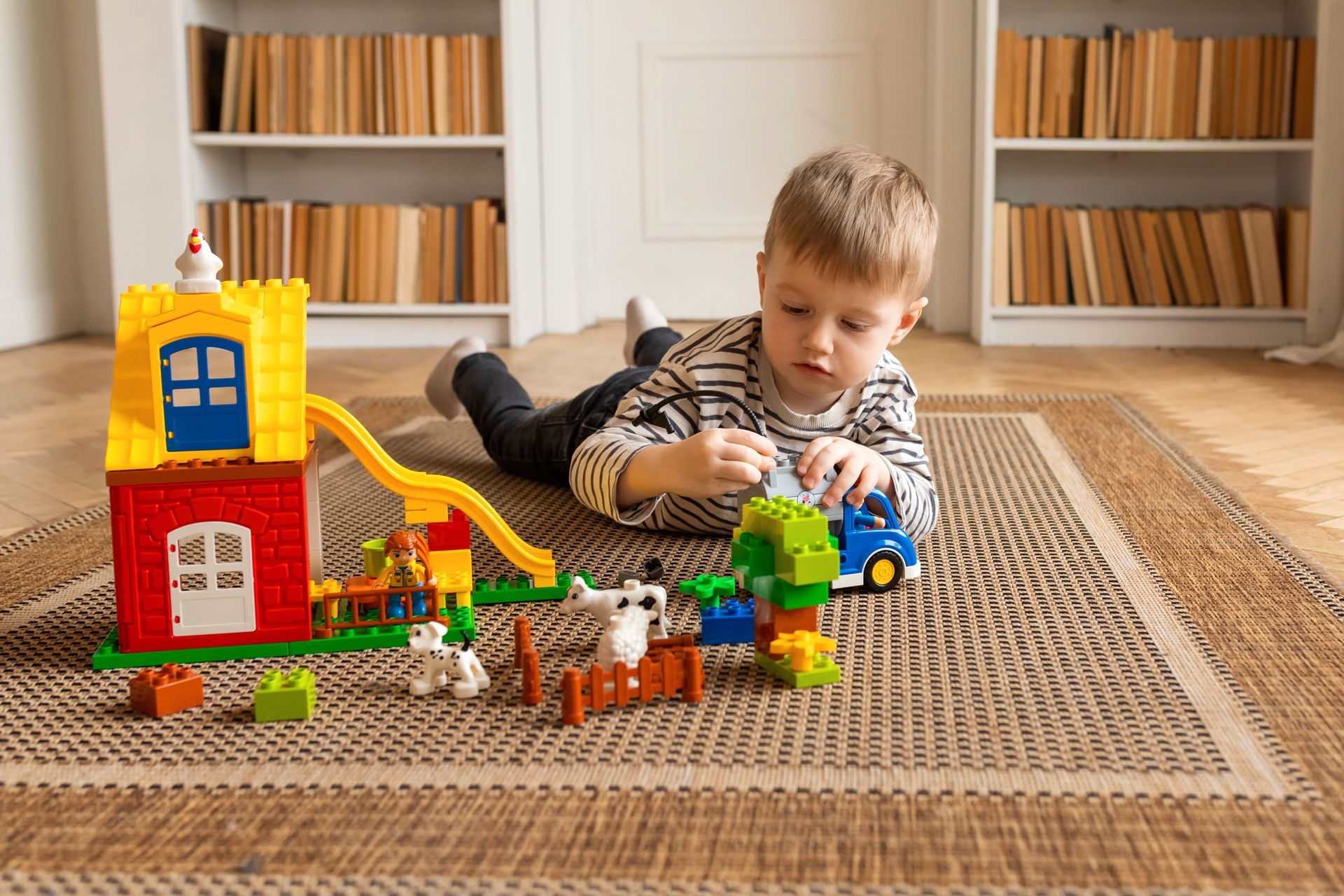
For toddlers, typically children between twelve months and three years, the OT evaluation is heavily play-based and relies significantly on parent report and clinical observation rather than formal standardized testing. Very young children cannot be asked to sit still and complete structured tasks for extended periods, nor should they be. Instead, the therapist creates a naturalistic play environment and observes how the child moves, explores, responds to sensory input, and engages with materials and people. The parent interview carries particular weight at this age because parents are the primary observers of how the child functions across daily environments and routines. In-home evaluations are especially valuable for toddlers because the child is already in their most comfortable, regulated environment, which produces the most authentic and informative clinical picture.
What does an OT evaluation look like for school-age children?
For school-age children, typically five years and older, the evaluation becomes more structured and incorporates a broader range of standardized assessments. Handwriting is evaluated in detail because it is one of the primary functional demands of the school environment. Visual motor integration, fine motor speed and precision, and the ability to sustain attention and effort across structured tasks all become more central to the evaluation. Academic function, including how the child manages the sensory and motor demands of the classroom, is considered alongside the developmental findings. A parent's report is still essential, and teacher input, when available, adds a valuable third perspective on how the child is functioning in a structured group environment.
How does an OT evaluate sensory processing?
Sensory processing evaluation begins with a detailed parent questionnaire, most commonly the Sensory Profile or Sensory Processing Measure, which asks caregivers to rate how their child responds to a wide range of sensory experiences across home, school, and community environments. This is paired with structured clinical observation during the evaluation session, where the therapist presents specific sensory experiences and observes the child's responses. The resulting profile identifies whether the child is hypersensitive (over-responsive), hyposensitive (under-responsive), or sensory-seeking across each sensory system, and informs the specific sensory integration strategies that will be most effective for that child's unique profile. If sensory processing is identified as a primary area of need, direct intervention through therapy for sensory integration addresses these challenges at the neurological level, building the capacity for more regulated and functional sensory responses over time.
How does an OT evaluate fine motor skills?
Fine motor evaluation involves a combination of standardized testing and clinical observation of the specific motor skills most relevant to the child's daily life. The therapist assesses hand strength, grip patterns, in-hand manipulation (the ability to move objects within the hand), bilateral coordination (using both hands together), scissor skills, and the motor planning required for handwriting and other precision tasks. Handwriting samples are typically collected and analyzed for letter formation, sizing, spacing, line use, and fluency. The findings inform a targeted intervention plan that builds the specific motor foundations each child needs. When fine motor delays are identified, direct intervention through motor skills therapy builds the strength, coordination, and motor planning capacity that makes daily tasks more accessible and more enjoyable for the child.
What are the signs your child needs an OT evaluation?
Many families arrive at an OT evaluation after months or years of noticing that something feels harder for their child than it seems to be for other children their age. The signs are not always dramatic. Sometimes they are quiet, cumulative, and easy to explain away until they are not. Here is what I want parents to pay attention to.
What sensory and motor signs point toward an evaluation?
Watch for intense reactions to clothing textures, sock seams, food textures, or everyday sounds that do not seem to bother other children. Watch for a child who constantly seeks out intense physical input like crashing, spinning, and climbing, or one who avoids movement and physical contact in ways that limit their participation in play. Watch for fine motor delays that show up as avoidance of drawing, coloring, or writing, difficulty with scissors or utensils, or handwriting that is illegible despite the child's clear effort and intelligence. Watch for poor body awareness, frequent tripping or bumping into things, or difficulty with tasks that require coordination of both hands. Any of these patterns, especially in combination, are worth exploring through a formal OT evaluation.
What behavioral and daily life signs suggest an OT evaluation is needed?
Beyond the sensory and motor signals, watch for difficulty with transitions that consistently produces explosive or prolonged emotional responses disproportionate to the situation. Watch for self-care tasks that feel impossibly difficult well past the age when they should feel automatic: dressing, brushing teeth, managing fasteners, using utensils. Watch for a child who cannot sustain attention long enough to complete age-appropriate activities, not because they are uninterested, but because their nervous system cannot hold the regulatory state required. Watch for emotional dysregulation that feels bigger than the moment and takes a long time to recover from. These are not character issues and they are not parenting failures. They are nervous system signals that deserve a skilled, compassionate response.
How do you prepare for your child's OT evaluation?
Preparation makes a meaningful difference in the quality of the evaluation and the clarity of the results. Here is how to approach it so that you and your child both feel ready.
What information should you gather before the evaluation?
Gather any previous evaluations, assessments, or reports your child has received, including speech therapy evaluations, psychological assessments, developmental screenings, and school-based evaluations. Collect relevant medical history including birth history, any diagnoses, medications, and significant developmental milestones. If your child attends school, request any teacher observations or school reports that speak to their function in the classroom. And perhaps most importantly, write down your own observations: the specific daily challenges that prompted you to seek an evaluation, the patterns you have noticed over time, the moments that feel hardest for your child and for your family. That parent knowledge is clinical data, and a skilled OT will want every bit of it.
How do you prepare your child for the evaluation day?
Keep it simple and low-pressure. Tell your child that you are going to spend some time with a therapist who is going to play some games with them and learn about how they do different things. Avoid framing it as a test they can pass or fail. Avoid over-explaining or building it up in ways that increase anticipatory anxiety. On the day of the evaluation, make sure your child has eaten, is well-rested if possible, and has had time for some movement before the session. If your child has specific comfort objects or sensory tools they rely on, bring them. And give yourself permission to feel whatever you feel going in. Seeking clarity for your child is an act of love, and the evaluation is the beginning of understanding, not the end of anything.
Ready to schedule an OT evaluation?
If you are in the Miami area and ready to take the next step toward understanding your child's needs, I would love to connect. Whether your child has been referred by a provider or you are following your own instinct that support is needed, an OT evaluation is where clarity begins.
Explore what occupational therapy in Miami Beach, FL looks like with Play2Learn Plant2Grow and let's start growing together.

Hi! I'm Erika Valdes Certified and Licensed Occupational Therapist (OTR)
Erika Valdes, OTR/L is a licensed occupational therapist with over 15 years of clinical experience supporting children and adolescents across school, home, and community environments.
Download my free guide