
Therapy for Kids in Miami: How to Know What Your Child Needs and Where to Start
You know something is off. Maybe your child is struggling at school and you cannot quite put your finger on why. Maybe their meltdowns have gotten more frequent and more intense and the strategies that used to work have stopped working. Maybe their teacher has flagged something, or their pediatrician has mentioned therapy, or you have simply been watching your child work harder than they should have to just to get through an ordinary day. Whatever has brought you here, the fact that you are asking the question means you are already doing the most important thing a parent can do: paying attention.
Therapy for kids covers a wide range of disciplines, and one of the most overwhelming parts of getting started is simply figuring out which type of support your child actually needs. Occupational therapy, speech therapy, physical therapy, mental health therapy, ABA, play therapy, each one addresses something different, involves a different kind of specialist, and is indicated for different signs and challenges. Getting the right match matters, because the right support at the right time can change the entire trajectory of your child's development.
This guide breaks down each type of therapy for children clearly and practically, including what it is, the signs that your child may need it, and the specialist you are looking for. By the end you will have a clear enough picture to take your next step with confidence rather than confusion.
In case you are new here, I am Erika, a pediatric occupational therapist and the founder of Play2Learn Plant2Grow an in-home pediatric OT services. I work with children and their families inside their homes and their daily rhythms because I believe that is where real growth happens. If you are not sure where to start for your child, keep reading. Clarity is closer than you think.
How do I know when my child needs therapy?
This is the question that keeps most parents up at night, and the honest answer is that there is no single threshold that tells you when it is time. What there is, is a set of patterns worth paying attention to. When your child's challenges are affecting their daily functioning consistently, meaning they are showing up at home, at school, and in social situations rather than only in isolated moments, that is worth exploring with a professional. When your child's behavior or development seems to be getting more restricted or more difficult over time rather than expanding and improving, that is worth exploring. When your child's struggles are affecting your family's quality of life on a regular basis, that is worth exploring.
You do not need a diagnosis to seek an evaluation. You do not need your child to be at a crisis point. Early support is almost always more effective than waiting, because the younger a child is when the right intervention begins, the more neuroplasticity their brain has available to build new skills and patterns. Asking for an evaluation is not an overreaction. It is the most practical and loving thing you can do when something in your child's development is not sitting right with you.
Trust your instinct. You know your child better than any professional ever will. If something has been consistently catching your attention, that is enough of a reason to take the next step.
At what age should a child start therapy?
There is no minimum age for pediatric therapy. Occupational therapists, speech-language pathologists, and physical therapists all work with infants, and early intervention services in the United States are available for children from birth through age two under the Individuals with Disabilities Education Act. Research consistently shows that the earlier intervention begins, the more effective it is, because the brain is most plastic and most receptive to new learning in the earliest years of life.
For mental health therapy, most approaches are adapted for children as young as two to three years old, with play-based modalities being particularly effective for very young children who do not yet have the language to engage in talk-based therapy. There is no age at which therapy becomes less useful, and many children benefit from different types of support at different stages of their development as the demands placed on them change.
If your child is school-age and has not yet received support for challenges you have been noticing for some time, it is not too late. The right intervention at any age builds skills, reduces distress, and opens doors that were previously closed. What you water, grows, regardless of when you start.
Occupational therapy for kids
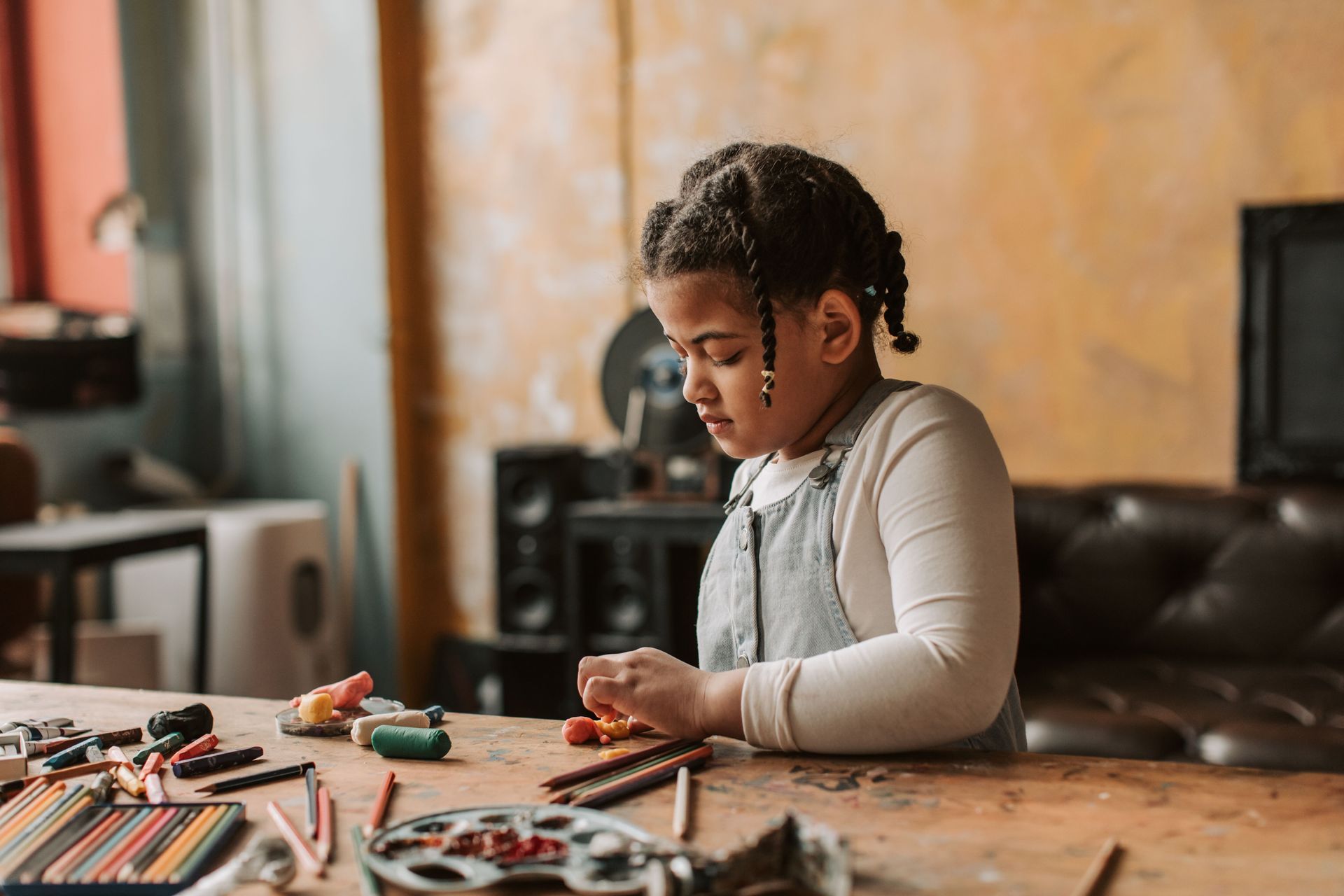
Occupational therapy helps children develop the skills they need to participate fully and independently in the occupations of daily life. For a child, those occupations include playing, learning, getting dressed, eating, managing personal hygiene, participating in school, and navigating the sensory and physical demands of their environment. OT addresses the underlying developmental, sensory, motor, and regulatory factors that make those daily occupations harder than they should be.
Pediatric OT draws from sensory integration theory, neurodevelopmental treatment, motor learning, and play-based intervention. It is not drill-based or repetitive. It looks like purposeful, joyful play that is specifically designed to build the skills your child needs at the level their nervous system is actually at right now.
Signs your child may need occupational therapy:
- Your child has difficulty with fine motor tasks like holding a pencil, using scissors, managing buttons and zippers, or using utensils independently
- Your child is over or under responsive to sensory input including textures, sounds, movement, or touch
- Your child has significant difficulty with self-care tasks like dressing, grooming, or eating
- Your child struggles with handwriting, drawing, or other visual motor tasks
- Your child has difficulty with emotional regulation, transitions, or managing big emotions in everyday situations
- Your child avoids physical play, tires easily during physical activity, or seems uncoordinated compared to peers
- Your child has feeding difficulties including extreme picky eating, food aversions, or difficulty with chewing and swallowing
- Your child has been diagnosed with autism, ADHD, sensory processing disorder, developmental coordination disorder, or a related condition
The right specialist: A licensed occupational therapist, abbreviated OT or OTR/L, with specialized training and experience in pediatric practice. Look for someone with additional training in sensory integration, which is the most evidence-based framework for addressing the sensory and developmental challenges that OT most commonly treats in children. In-home OT is particularly valuable because it allows the therapist to assess and treat your child's challenges in the actual environments where those challenges show up every day.
Speech therapy for kids
Speech-language pathology, commonly called speech therapy, addresses communication, language, and swallowing. It covers a much broader range of skills than most parents realize. Speech therapists work not only on articulation and pronunciation but on receptive and expressive language, social communication, fluency, voice, and the oral motor mechanics of feeding and swallowing.
For children, speech therapy is one of the most commonly recommended early interventions because language development is so foundational to learning, social connection, and emotional expression. A child who cannot communicate their needs effectively is a child who is more likely to express those needs through behavior, which is why speech therapy and OT so frequently work together as a team.
Signs your child may need speech therapy:
- Your child is not meeting language milestones for their age, including babbling, first words, two-word phrases, and sentence use
- Your child's speech is difficult for unfamiliar people to understand past age three
- Your child stutters or has significant disfluency when speaking
- Your child has difficulty understanding and following directions
- Your child has difficulty with social communication including taking turns in conversation, understanding nonverbal cues, or using language appropriately in different social contexts
- Your child has difficulty with feeding or swallowing including gagging, coughing during meals, or difficulty managing certain food textures
- Your child has been diagnosed with autism, a language disorder, a hearing impairment, or a condition that affects oral motor function
The right specialist: A licensed speech-language pathologist, abbreviated SLP or CCC-SLP, with experience in pediatric practice. If feeding and swallowing are the primary concern, look specifically for an SLP with specialized training in pediatric dysphagia or feeding disorders. For social communication challenges related to autism, look for an SLP with training in augmentative and alternative communication and social pragmatics.
Physical therapy for kids
Pediatric physical therapy addresses gross motor development, movement quality, strength, endurance, balance, and coordination. While occupational therapy and physical therapy overlap in some areas, physical therapy focuses more specifically on the mechanics of movement and on restoring or building functional mobility. Pediatric physical therapists work with children who have delays or impairments in their ability to move through the world safely and efficiently.
Physical therapy is often the right starting point when a child's gross motor challenges are primarily structural or biomechanical, involving muscle weakness, joint instability, neuromotor impairment, or recovery from injury or surgery. When gross motor challenges are more significantly driven by sensory processing differences, motor planning difficulties, or developmental coordination issues, OT is often the more comprehensive fit.
Signs your child may need physical therapy:
- Your child is not meeting gross motor milestones for their age including rolling, sitting, crawling, standing, and walking
- Your child has significantly low muscle tone or high muscle tone that is affecting their movement and posture
- Your child has an asymmetry in how they use their body, consistently favoring one side
- Your child is recovering from an orthopedic injury, surgery, or a condition affecting their bones, joints, or muscles
- Your child has been diagnosed with cerebral palsy, spina bifida, muscular dystrophy, or another condition affecting motor function
- Your child has significant difficulty with balance, falls frequently, or is unable to keep up with peers physically in ways that are affecting their participation and confidence
The right specialist: A licensed physical therapist, abbreviated PT or DPT, with specialized training and experience in pediatric practice. For children with neuromotor conditions like cerebral palsy, look for a PT with training in neurodevelopmental treatment or other neuromotor frameworks. For infants with torticollis or plagiocephaly, look for a PT with specific experience in infant motor development.
Mental health therapy for kids
Mental health therapy for children addresses emotional, behavioral, and psychological challenges including anxiety, depression, trauma, grief, behavioral difficulties, and social and emotional development. It is delivered by a range of professionals including licensed clinical social workers, licensed professional counselors, licensed marriage and family therapists, and child psychologists, depending on the specific needs and the level of clinical complexity involved.
Mental health therapy for children is almost always adapted to be developmentally appropriate, which means it looks very different for a five-year-old than it does for a fifteen-year-old. Young children typically engage in play-based and expressive modalities. Older children and adolescents may engage in more talk-based approaches including cognitive behavioral therapy, dialectical behavior therapy, and trauma-focused cognitive behavioral therapy, among others.
Signs your child may need mental health therapy:
- Your child has persistent anxiety that is affecting their ability to attend school, separate from you, or participate in activities they previously enjoyed
- Your child has experienced a significant loss, trauma, or life transition that is affecting their functioning and emotional wellbeing
- Your child has persistent sadness, withdrawal, or loss of interest in activities that is lasting more than two weeks
- Your child has significant behavioral challenges including aggression, defiance, or self-harm that are not responding to ordinary parenting strategies
- Your child is expressing thoughts of hurting themselves or others
- Your child is struggling with significant social difficulties including peer relationships, bullying, or social isolation
- Your child has experienced abuse, neglect, or another form of trauma
The right specialist: The right mental health professional depends on the specific concern. For anxiety, depression, and behavioral challenges, a licensed clinical social worker or licensed professional counselor with experience in child and adolescent mental health and training in evidence-based approaches like CBT is a strong starting point. For trauma, look specifically for a therapist trained in trauma-focused cognitive behavioral therapy or EMDR. For more complex presentations or when a diagnostic evaluation is needed, a child psychologist or child psychiatrist may be the appropriate level of care.
ABA therapy for kids
Applied behavior analysis, commonly called ABA, is a therapeutic approach based on the science of learning and behavior. It uses principles of reinforcement to teach new skills, reduce behaviors that interfere with learning and daily functioning, and build independence across a wide range of developmental domains. ABA is most commonly associated with autism spectrum disorder, where it has a substantial research base, and it is often one of the first interventions recommended following an autism diagnosis.
ABA has evolved significantly over the past two decades. Modern ABA approaches are naturalistic, play-based, and child-led rather than the rigid, table-based drill approaches of earlier decades. When it is implemented well by a skilled and compassionate therapist, ABA supports skill development in a way that is respectful of the child's autonomy and responsive to their individual needs and interests.
Signs your child may need ABA therapy:
- Your child has received an autism spectrum disorder diagnosis and is having significant difficulty with communication, social skills, daily living skills, or behavioral regulation
- Your child has significant challenging behaviors including aggression, self-injury, or severe tantrums that are affecting their safety and their ability to participate in daily life and learning
- Your child needs intensive, systematic skill-building support across multiple developmental domains simultaneously
- Your child's school or developmental team has recommended ABA as part of a comprehensive intervention plan
The right specialist: A board certified behavior analyst, abbreviated BCBA, who has experience working with children and who uses naturalistic, play-based ABA approaches. When evaluating an ABA provider for your child, ask specifically about their approach to assent and child autonomy, how they integrate the child's interests and preferences into programming, and how they collaborate with the rest of your child's support team including their OT and SLP.
Play therapy for kids
Play therapy is a form of mental health therapy that uses play as the primary medium for therapeutic communication and healing. It is based on the understanding that play is the natural language of children, and that children express, process, and make sense of their experiences through play in the same way that adults use words in talk-based therapy. Play therapy creates a safe, structured relationship with a trained therapist in which a child can use play to express what they cannot yet put into words, work through difficult experiences, and develop new ways of understanding and relating to the world.
Play therapy can be child-centered, in which the child directs the play entirely and the therapist follows their lead, or directive, in which the therapist introduces specific activities or themes to address particular therapeutic goals. Many play therapists use a combination of both approaches depending on the child's needs and the stage of the therapeutic relationship.
Signs your child may need play therapy:
- Your child has experienced a traumatic event, a significant loss, or a major life transition such as divorce, a move, or the birth of a sibling
- Your child has emotional or behavioral difficulties but is too young or too dysregulated to engage in talk-based therapy
- Your child is showing signs of anxiety, depression, or social withdrawal that are affecting their daily functioning
- Your child has difficulty expressing their feelings verbally and tends to act out emotionally rather than communicate their experience
- Your child has experienced abuse or neglect and needs a trauma-informed therapeutic approach that does not depend on verbal disclosure
The right specialist: A licensed mental health professional, such as a licensed clinical social worker, licensed professional counselor, or psychologist, who holds a registered play therapist credential, abbreviated RPT, from the Association for Play Therapy. Look for a therapist who has specific experience working with children in your child's age range and with the specific challenges your child is facing.
What is the 3 3 3 rule for kids?
The 3 3 3 rule is a simple grounding technique that is commonly used with children who are experiencing anxiety or emotional overwhelm. It works by redirecting the child's attention from their anxious thoughts to their immediate sensory environment, which activates the parasympathetic nervous system and interrupts the anxiety spiral. The rule asks the child to name three things they can see, three sounds they can hear, and three parts of their body they can move or feel.
The 3 3 3 rule is easy for children to remember, quick to implement, and does not require any materials or preparation. It can be used in the middle of a difficult moment at school, before a stressful transition, or whenever a child starts to feel overwhelmed. Teaching it to your child during a calm moment, and practicing it together regularly, makes it much more accessible when they actually need it under stress.
From an OT perspective, the 3 3 3 rule works because it engages multiple sensory systems simultaneously, which is one of the most effective ways to shift a dysregulated nervous system back toward a state of calm and organization. It is one of many body-based regulation tools that can be woven into your child's daily routine as a preventive strategy rather than only used as a crisis intervention.
Getting your child the right support does not have to be overwhelming
Start with the signs that are most present and most consistent in your child's daily life, and let those signs point you toward the type of support most likely to help. You do not have to have all the answers before you take the first step. You just have to take it.
At Play2Learn Plant2Grow, I offer in-home pediatric OT services across Miami and South Florida that meet your child where they are, inside your home, your routines, and your family's real rhythm. If your child's challenges are sensory, motor, developmental, or regulatory in nature, I would love to talk with you about whether OT is the right next step.
If you are looking for an occupational therapist in Miami, FL, I serve families across Coral Gables, Coconut Grove, Miami Beach, Brickell, Doral, and throughout South Florida.

Hi! I'm Erika Valdes Certified and Licensed Occupational Therapist (OTR)
Erika Valdes, OTR/L is a licensed occupational therapist with over 15 years of clinical experience supporting children and adolescents across school, home, and community environments.
Download my free guide