
OT for Handwriting: What Occupational Therapy Actually Does for Kids Who Struggle to Write
You have watched your child grip the pencil until their knuckles go white. You have sat beside them while letters wobble off the line, while tears come faster than words, while what started as homework becomes a full-body shutdown. And somewhere along the way, someone suggested your child just needs more practice, as if repetition alone could untangle what is actually going on. OT for handwriting works differently, and if you have been wondering whether occupational therapy could be the missing piece for your child, you are asking exactly the right question.
Handwriting is one of the most complex skills your child's brain and body learn to do together. It asks for core stability, finger strength, visual tracking, sensory regulation, and the ability to hold a thought long enough to get it onto a page. When any one of those pieces is missing or underdeveloped, the pencil becomes the enemy and your child starts to believe the story that they are just bad at writing. That story is not true. And it does not have to be the one they carry forward.
In this post, you will find out exactly what occupational therapy looks at when it comes to handwriting, what sessions actually look like for your child, and why for many families, OT is the first time anyone has looked at the right thing. This is not about more drills. This is about building the foundation that makes writing possible and maybe even enjoyable for your child.
In case you are new here, I am Erika, a pediatric occupational therapist and the founder of Play2Learn Plant2Grow an in-home pediatric OT service. I blend evidence-based therapy with sensory, movement, and mindfulness practices that meet your child and you exactly where you are. If your child is struggling with handwriting, I want you to know: this is not a discipline issue, and your child is not behind. They may simply need someone to look a little deeper.
Why is handwriting so hard?
Most parents think of handwriting as a paper-and-pencil skill. Pick up the pencil, form the letters, stay on the lines. But what looks simple on the surface is actually the result of at least six different systems in your child's body working together at the same time. Core stability keeps your child upright in the chair. Shoulder and wrist strength control the movement of their hand. Fine motor coordination manages the pencil. Visual-motor integration connects what their eyes see with what their hand does. Sensory processing filters out distractions and tolerates the feel of the pencil on paper. And executive function holds the thought long enough to get it written down. When any one of those systems is underdeveloped, the whole task falls apart and your child is left working ten times harder than their peers just to produce one legible sentence.
This is why your child's handwriting struggles so often come with big emotions. Their nervous system is genuinely overwhelmed by a task that requires everything to fire at once. Some children avoid writing entirely. Others press so hard they tear through the paper. Some fatigue after a few lines, lose their place constantly, or produce letters that look different every single time. Each of those patterns tells a different story about which underlying system needs support. None of them mean your child is not trying. Most of them mean your child is trying incredibly hard, just without the right foundation underneath them.
What is happening when your child struggles to write
When your child struggles with handwriting, the visible problem is almost never the real problem. A child who cannot stay on the lines may have a visual-motor integration gap, meaning their eyes and hands are not communicating efficiently enough to guide the pencil with precision. A child who writes with enormous pressure may have reduced proprioceptive awareness, meaning they cannot feel how hard they are pressing without pushing harder. A child who fatigues after two sentences may have low core tone or reduced shoulder stability, meaning their body is using so much energy just to stay upright that very little is left for the hand. These are nervous system and developmental stories, not character flaws. And the moment you understand that about your child, everything shifts.
What I look for as an OT goes far beyond letter formation. I am watching how your child sits, how they stabilize their paper, how they hold the pencil, whether they switch hands, how quickly they fatigue, and how their body responds to the sensory experience of writing. I am looking at the whole child because that is where the answers actually live.
Telling your child to practice more rarely works
Repetition is only useful when the foundation is solid. When your child practices handwriting on top of an underdeveloped foundation, they do not get better. They get more practiced at compensating. They learn to hunch their shoulders to create stability their core is not providing. They grip the pencil harder to get feedback their sensory system is not registering. They hold their breath to concentrate through a task that costs them more effort than it should. These compensations become habits, and habits become harder to undo the longer they go unaddressed. More practice, in this case, does not build the skill. It deepens the struggle.
What actually works is going back to the beginning, not in a punishing way, but in a curious one. What does your child's body need in order to make writing feel manageable? Usually the answer involves movement, sensory input, and play long before a pencil ever enters the picture. That is not a detour. That is the most direct path forward.
Can an occupational therapist help with your child's handwriting?
Yes, and OT is often the most effective intervention available precisely because it is the only discipline trained to look at handwriting as a full-body, sensory, and developmental skill rather than just a school task. Teachers can identify that your child's handwriting is struggling. Tutors can drill letter formation. But an OT is trained to find out why the struggle is happening in the first place and to build the skills that make improvement sustainable rather than temporary.
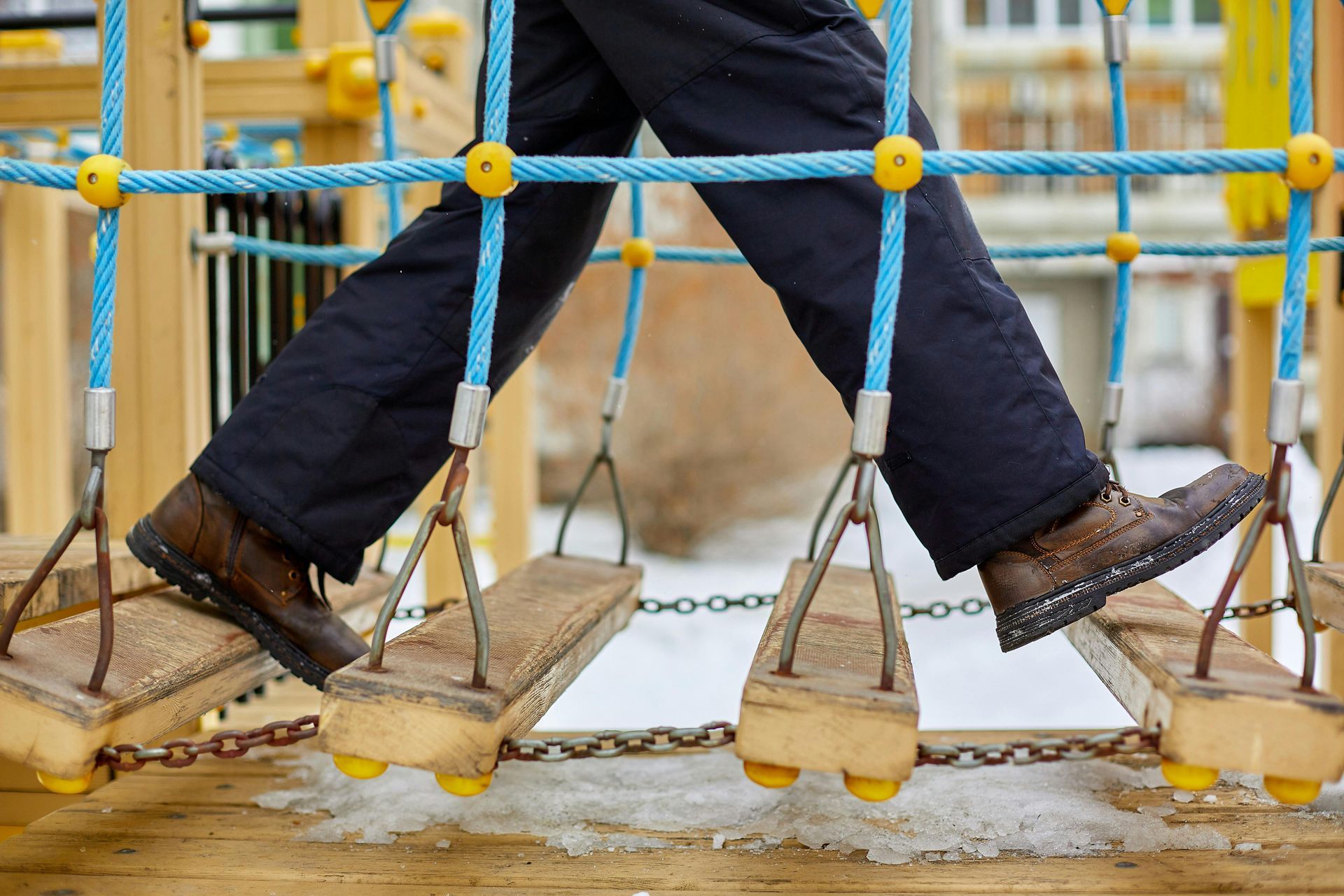
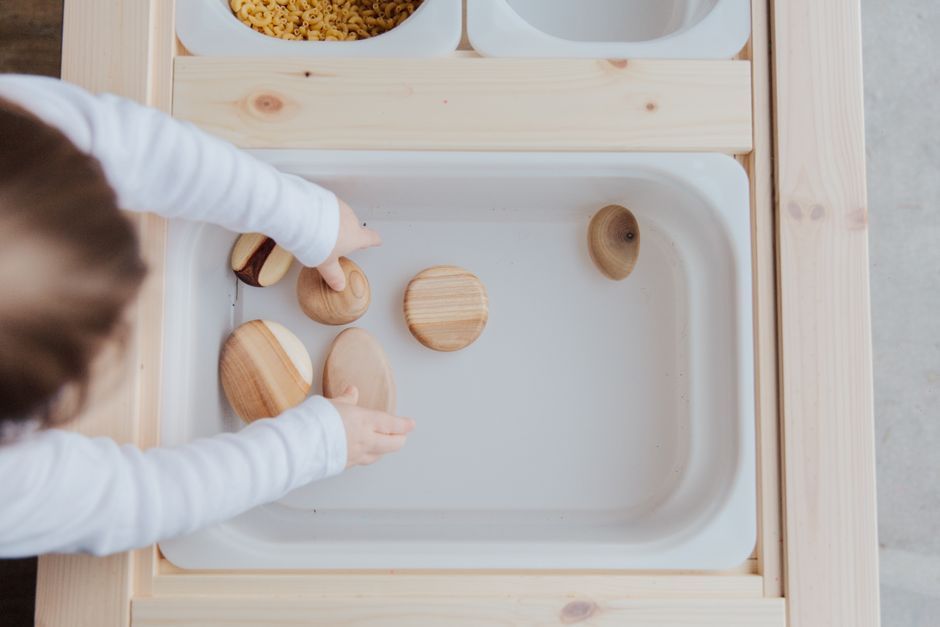
OT for handwriting does not look like sitting at a desk and tracing letters. It looks like your child crawling through a tunnel to build shoulder stability. It looks like pinching playdough to develop in-hand manipulation. It looks like drawing large letters in a tray of sand to give your child's nervous system the tactile feedback it needs before asking their hand to work on paper. It looks like you are learning alongside your child so that what happens in a session becomes part of how your family moves through the day. That is what makes OT different. And that is what makes it work.
What an OT evaluates that no one else is looking at
A comprehensive OT handwriting evaluation looks at far more than how your child forms letters. I assess pencil grasp and pressure, in-hand manipulation skills, bilateral coordination, visual-motor integration, postural stability during seated tasks, sensory processing patterns, and fine motor strength and endurance. I use standardized assessments like the Beery Visual-Motor Integration test, the Bruininks-Oseretsky Test of Motor Proficiency, and the Peabody Developmental Motor Scales alongside clinical observation of how your child actually functions during real writing tasks. The combination of formal assessment and functional observation gives me a complete picture that a report card or a teacher's note simply cannot provide.
The question I am always trying to answer is not how bad the handwriting is. What does your child's body and nervous system need in order to make writing feel safe and automatic? That question leads somewhere productive. And the answers almost always point toward things that are very workable once you know what you are actually working with.
Does OT help with dysgraphia?
Dysgraphia is a specific learning disability that affects written expression, including letter formation, spacing, spelling, and the physical act of writing itself. It is more common than most parents realize, and it is frequently missed or mislabeled as carelessness or lack of effort in your child. OT is one of the primary interventions for dysgraphia, particularly for the motor and sensory components that make the physical act of writing so effortful for your child. OT practitioners play a central role in supporting children with handwriting difficulties, including those with dysgraphia, by addressing the underlying motor and sensory processing skills that support written communication.
The goal is for letter formation to become so practiced and physically grounded that it no longer requires conscious effort from your child, freeing their cognitive energy for the actual content of their writing. It also teaches compensatory strategies including specialized pencil grips, slant boards, alternative writing tools, and pacing strategies that reduce fatigue. OT addresses the motor and sensory side of dysgraphia, while educational specialists and reading specialists address the language processing side. The most effective support usually involves both, a team that sees your whole child rather than just one piece of the puzzle.
How OT improves your child's handwriting and what sessions actually look like
One of the things I hear most often from parents after our first session is some version of: that did not look like therapy. And I take that as a compliment. Effective OT for handwriting rarely looks like sitting at a table practicing letters. It looks like play with a very clear purpose, activities chosen specifically to build the body-based skills that your child's writing depends on, in a sequence that makes sense for where your child is right now. Every game, every sensory activity, every movement break is there for a reason. Your child just gets to experience it as fun.
The skills your child builds before a pencil is ever picked up
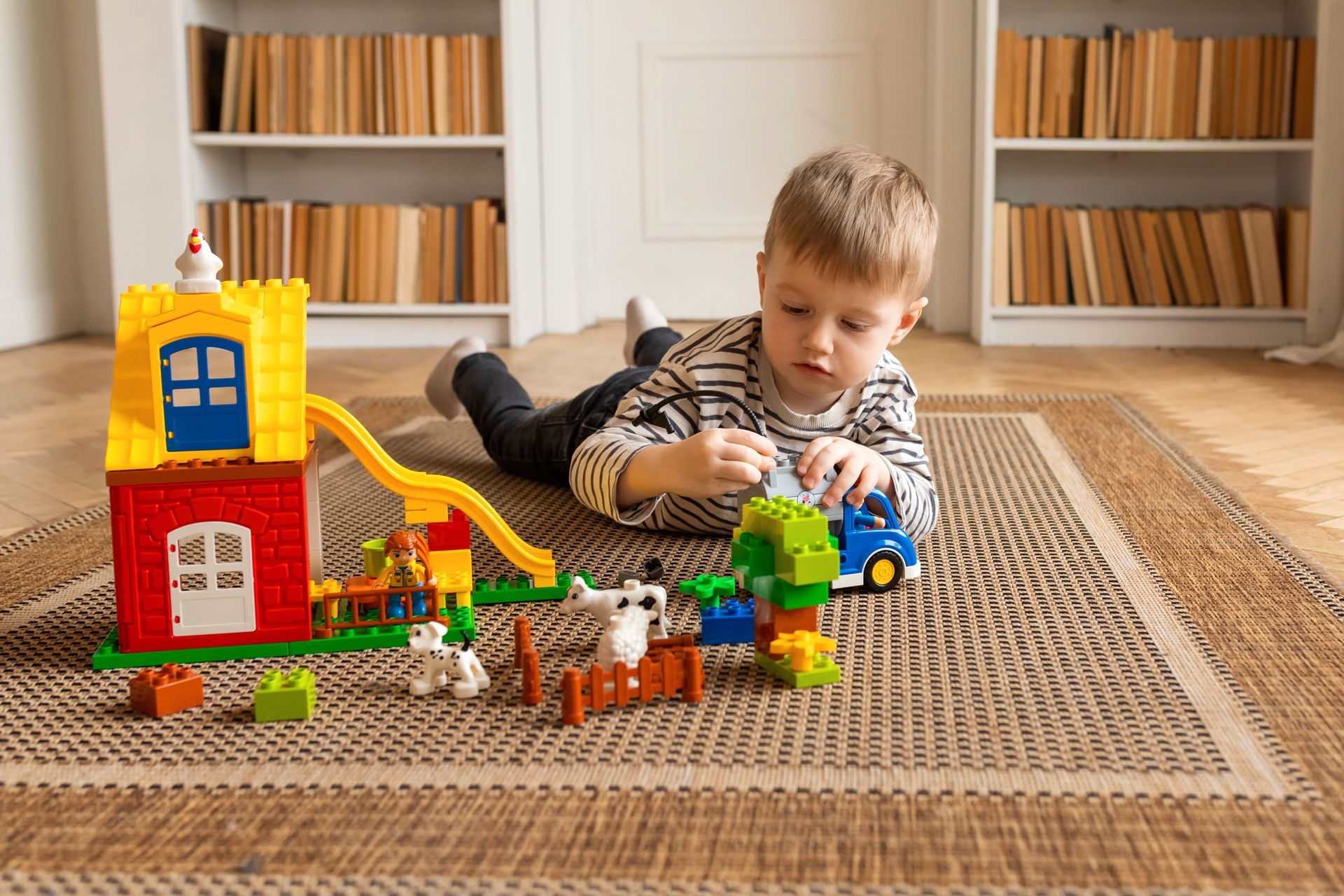
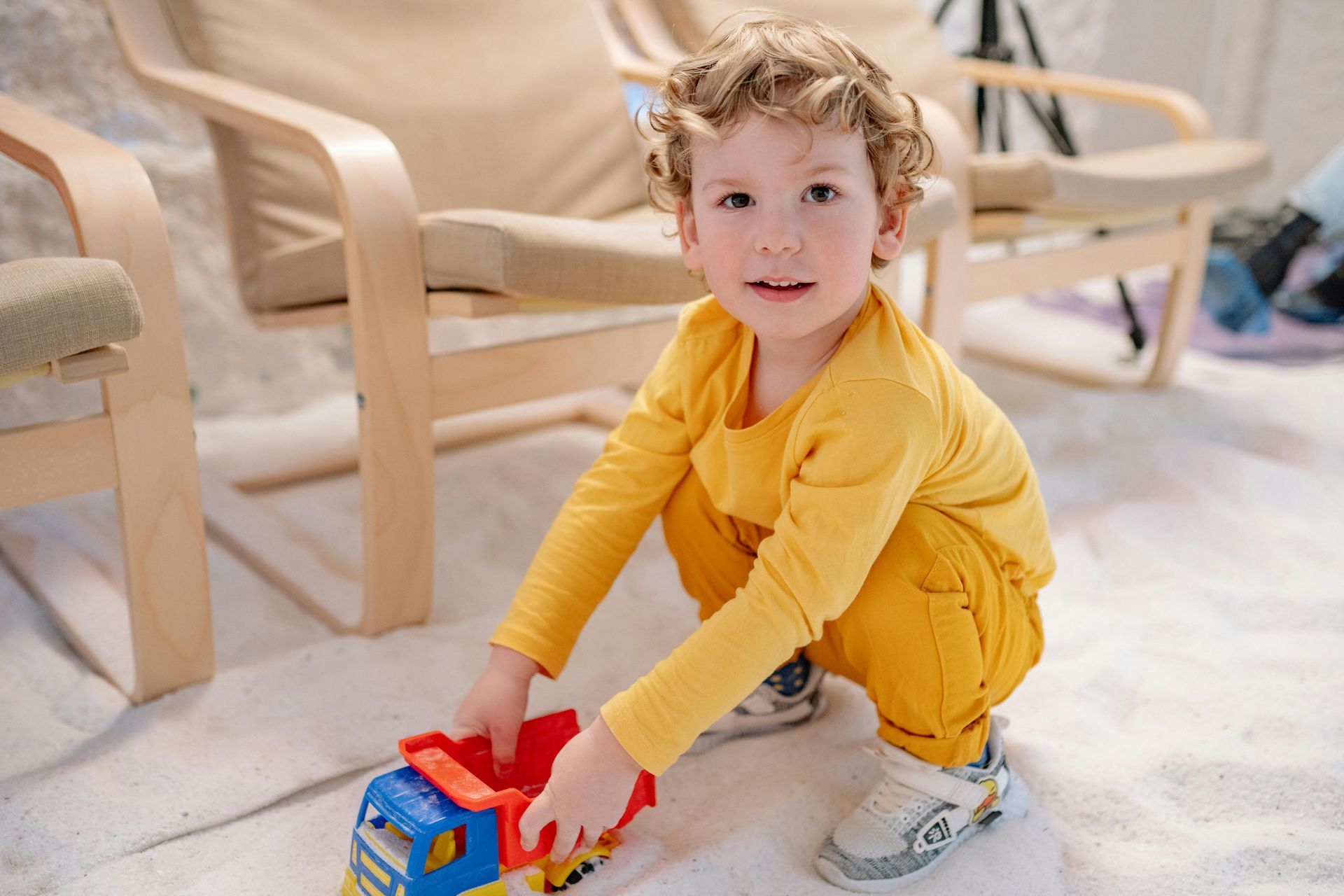
Before your child ever forms a letter, we build the body that is going to hold the pencil. Crawling and weight-bearing activities develop the shoulder stability that controls fine hand movement in your child. Resistive play with putty or therapy dough builds hand strength and in-hand manipulation. Threading beads, sorting small objects, and using tongs develop the precise finger coordination that handwriting requires. Sensory bins filled with rice, kinetic sand, or shaving cream give your child's nervous system the tactile input it needs to discriminate between sensations, which directly supports pencil pressure control and spatial awareness on the page.
None of this looks like handwriting practice. All of it is handwriting practice. Your child squeezing putty into small balls is building the same grip strength they will use to hold a pencil for forty minutes without fatiguing. Your child drawing letters in a tray of sand is giving their nervous system the deep tactile feedback that makes letter formation easier to internalize than pencil on paper ever could. Therapy should feel like fun with a purpose. And when it does, your child stays engaged, builds faster, and carries the skills forward into real life.
How in-home OT makes handwriting practice part of your family's daily life
When I work with your child in your home, I am not just working with your child. I am working with the environment, the routines, the rhythms, and your whole family. I can see whether your child's chair height is creating strain. I can notice that the kitchen table wobbles and is making postural stability harder for your child. I can build a three-minute sensory warm-up into your homework routine that happens at the same table, in the same chair, at the same time every day so it becomes a ritual rather than an intervention. That is the difference between in-home OT and clinic-based work. The skills do not have to transfer from a therapy room into real life. They are built inside real life from the beginning.
The goal is never for your child to need me indefinitely. It is for you to understand your child's nervous system well enough to support them between sessions and long after our work together ends. When therapy happens at home, it becomes part of your rhythm. Like watering your plant each morning, it does not feel like effort. It becomes sacred.
What you can do at home between sessions
You do not need a therapy degree to make a real difference in your child's handwriting. What you need is presence, a little creativity, and a few simple rituals that become part of how your family moves through the day. The strategies below are not homework. They are invitations, small and playful and low-pressure moments that build exactly the skills your child's body needs to make writing easier over time.
Start with a five-minute sensory warm-up before any writing task. Jumping jacks, wall push-ups, or squeezing a stress ball gives your child's nervous system the proprioceptive input it needs to regulate and focus before asking their hands to do precise work. Then try swapping the pencil for chalk on a vertical surface, a chalkboard, a window with washable markers, or even a piece of paper taped to the wall. Vertical surfaces naturally build the shoulder stability that horizontal writing at a desk requires, and most children find them far less threatening than a lined worksheet.
Spend three to five minutes with playdough before sitting your child down to write. Pinching, rolling, and pressing builds hand strength and wrist control in a way that feels like play rather than preparation. Let your child write in sand, rice, or shaving cream before moving to paper. The tactile feedback from these surfaces reduces the cognitive load of letter formation and makes the shapes easier for your child to internalize. And if your child fatigues quickly during writing, try a simple slant board. Even a three-ring binder propped at an angle improves wrist extension and reduces the muscular effort of holding the pencil steady. Tiny rituals. Big impact. You do not have to change everything. You just have to start somewhere.
Your child's handwriting story is not finished yet
If you have been watching your child struggle with writing and wondering whether what they need is more practice or something else entirely, trust that feeling. Handwriting difficulties are rarely about effort. They are about foundations. And foundations can always be built, no matter where your child is starting from. You are not behind. You just need support that moves at your rhythm.
Whether you are navigating a dysgraphia diagnosis, noticing early fine motor delays, or simply watching your child cry over homework every night, our in-home pediatric OT services are here to help your family find a path that feels grounded, playful, and real. I work alongside you, inside your home and your daily rhythms, so that what we build in sessions does not disappear the moment I walk out the door.
If you are looking for an occupational therapist in Miami, FL, I serve families across Coral Gables, Coconut Grove, Miami Beach, Brickell, Doral, and throughout South Florida.

Hi! I'm Erika Valdes Certified and Licensed Occupational Therapist (OTR)
Erika Valdes, OTR/L is a licensed occupational therapist with over 15 years of clinical experience supporting children and adolescents across school, home, and community environments.
Download my free guide